Understanding the difference between a physical therapist and an occupational therapist can sometimes be confusing. Choosing the right career path often becomes a challenging decision.
It can also be challenging to decide which career path is the better option for you.
You must understand that both professions have a meaningful impact on patients, significantly enhancing quality of life.
Both therapy roles address the human body’s movement and mobility.
However, the specific objectives, methodologies, and patient outcomes of OTs and PTs differ and are designed to meet various healthcare needs.
This blog gives you a better idea of what physical therapy and occupational therapy jobs entail.
You can also know similarities to differences, and this explanation will help you make the right career choice in the future, especially if you are exploring therapy jobs.
The similarities between occupational therapy and physiotherapy
Despite their distinct focus, occupational therapists and physical therapists share many similarities, including overlapping clinical approaches and core skills.
The similarities are that both professions aim to enhance a patient’s ability by improving functioning and overall well-being.
Whether it is recovering movement after an injury or learning adaptive strategies for daily activities, both roles rely on structured interventions and specialized skills commonly used in physical therapy.
Both occupational and physical therapists seek to improve a patient’s quality of life.
While physical therapists mainly focus on movement and physical function, occupational therapists may also use physical exercises and problem-solving skills to help people perform everyday tasks more effectively.
These are a few similarities in what these professionals do.
They sometimes use the same types of exercises, therapeutic techniques, and assessment skills to help a patient recover.
In addition to their functional overlap, both roles require strong assessment, communication, and clinical reasoning skills to design effective treatment plans.
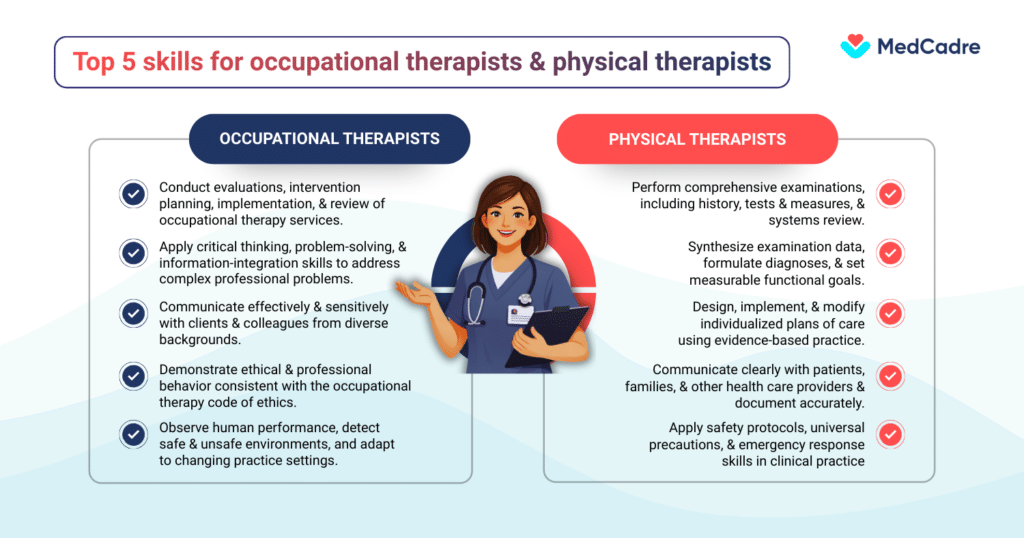
If you are planning to apply for these roles, you must be aware of the skills. A detailed infographic outlining their skill sets has been added below for clearer comparison.
Differences between the two therapy jobs
The basic difference between physical therapy and occupational therapy is that a certified PT focuses on improving the patient’s ability to move their body.
On the other hand, an occupational therapist mostly focuses on improving the patient’s ability to perform activities of daily living.
Additionally, PT’s foundation was in physical rehabilitation, whereas OT was founded in mental healthcare and physical rehabilitation.
Occupational therapists
These professionals mainly focus on helping people with everyday tasks for self-care and live independently, as they did prior to their health condition.
Those tasks vary from patient to patient based on the individual’s requirements.
With occupational therapy services, patients can learn to complete their daily tasks independently or with assistive devices or other tools.
No matter what challenges they face, you will guide patients every step of the way to recovery.
While you apply for the occupational therapist’s jobs, you must also know who needs your services:
- A person with a developmental condition, like autism or a learning disorder.
- Someone experiencing a psychological condition, like depression, dementia, or Alzheimer’s.
- An individual affected by a neurological condition, like multiple sclerosis, cerebral palsy, or a stroke.
- A patient managing a joint condition, like arthritis.
Physical Therapists
PTs are licensed doctors who mainly work with patients affected by diseases, injuries, and movement dysfunctions.
If you work in the physical therapy sector, you must strive to optimize patients’ quality of life by restoring and improving their ability to move, function, and lead more active lifestyles.
Certified physical therapists will examine, diagnose, and treat patients of all ages, from newborns to the aged at the end of life.
These professionals work with patients who have injuries, disabilities, or other health conditions that need treatment.
They also help patients avoid surgery and prescription drugs, manage pain and chronic conditions, and improve physical function and fitness.
For example, if you are planning to apply for a physical therapist job, you must know that you will be examining each patient and developing a treatment plan to reduce or manage pain, restore function, and prevent disability.
The responsibilities of a physical therapist include:
- Examining a patient’s medical history
- Checking a patient’s mobility and asking them about their goals and challenges
- Create a personalized treatment plan for patients
- Use various techniques to implement the treatment plan
- Tracking a patient’s progress during treatment
How to choose between occupational therapy and physical therapy
As a professional, you can see that both OT and PT are rewarding professions that offer freedom, flexibility, and fulfillment.
Choosing between an occupational and physical theraphy jobs depend entirely on your personal choice.
But you also need to consider other essential factors, such as the job outlook, salary growth, and your skills.
Job outlook
According to the BLS job outlook for physical therapists is projected to grow 11 percent from 2024 to 2034.
About 13,200 physical therapist openings are projected each year, on average, over the decade.
Many of those openings are expected to result from the need to replace workers who transfer to other occupations or exit the labor force, such as by retiring.
Details of compensation
Similarly, the employment of occupational therapists is expected to grow by 14 percent from 2024 to 2034.
According to the BLS, about 10,200 occupational therapist jobs are projected each year over the decade. This lets you understand job growth for both roles.
Additionally, it is important to review compensation details and determine which state offers the best compensation before you choose a role and join.
Top-paying states for OT and PT
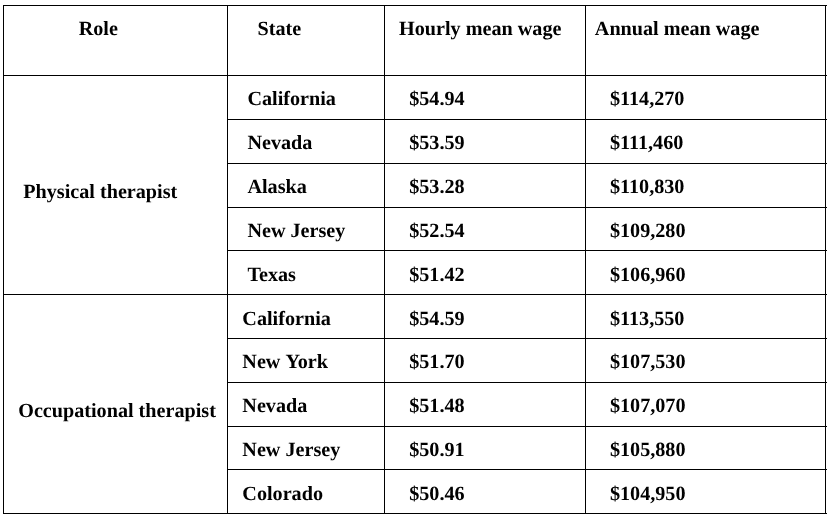
Source: BLS
By reviewing these facts and making a planned decision, you will understand that this is a work-life balance job and helps you grow professionally, whether as an occupational therapist or in another therapy role.
How to choose the right platform for your therapy career
After deciding whether you want to become an occupational or a physical therapist, the next important step is finding the right job opportunity.
Many professionals still rely on traditional staffing agencies. However, these agencies may not always provide full transparency about pay rates and contract terms.
The onboarding and credential verification process can also take longer than expected.
Free job portals may seem easy and convenient. But they often attract a large number of applicants, increasing competition for occupational therapist jobs.
Choosing MedCadre is a smarter and more efficient option. The platform uses AI-powered technology to simplify healthcare recruiting.
You can explore verified physical therapy opportunities that match your skills and preferences.
The process is transparent, structured, and easier to navigate. Credentialing is faster and more organized compared to traditional staffing methods.
You can manage your job search at your own pace while continuing your current responsibilities.
The transparent pricing model allows you to receive a significant portion of your billable rate.
Credentialing is 30% faster than traditional staffing methods, helping you start sooner.
The AI-integrated timesheet ensures accurate approvals and timely payments by reducing administrative delays.
With the right preparation and the right platform, you can confidently secure a role that supports your long-term professional growth.
Regularly check available openings and stay proactive in your job search, especially when reviewing physical therapy jobs. The right opportunity can help you build a stable and rewarding therapy career.
As a healthcare professional planning to take the next step, you can regularly check the current openings page to stay updated.
You can also submit your resume with basic details to explore new roles that align with your preferences and long-term career goals.
FAQs
What is the main difference between a physical therapist and an occupational therapist?
A physical therapist primarily focuses on improving movement, strength, and physical function after injury or illness. An occupational therapist helps patients regain independence in daily activities such as dressing, eating, or working. While both improve quality of life, their treatment goals differ.
Do these therapists work together?
Yes, they often collaborate in hospitals, rehabilitation centers, and outpatient clinics. While each professional has a distinct role, coordinated care helps patients recover more effectively
How do I decide which therapy career aligns with my goals?
Consider your interest in movement science versus daily functional independence. Research salary expectations, growth potential, work environments, and required education. Shadowing professionals or speaking with licensed therapists can also help you make an informed decision.
Can I search for occupational therapy jobs near me through MedCadre?
Yes. MedCadre lets you filter opportunities by preferred location, specialty, and experience level. This helps you quickly identify roles that match both your qualifications and your geographic preferences.
Is the credentialing process faster with MedCadre?
MedCadre streamlines credential verification using an organized digital process. Compared to traditional staffing methods, documentation and compliance steps are handled more efficiently, reducing delays and helping you start your assignment sooner.