If you are planning to change healthcare jobs, there are many opportunities available across the healthcare sector. Professionals nationwide are seeking roles that offer better pay, more flexibility, or growth opportunities. Transitioning into a new position can feel challenging. Licensing rules, specialty requirements, and patient care responsibilities can make the process more complex.
This blog outlines key steps to help you transition smoothly and successfully into your next healthcare role. By preparing carefully, you can step into your new role with confidence. The right position will fit your skills, career goals, and lifestyle.
Switching healthcare jobs can also improve your work-life balance and overall job satisfaction. So, consider options such as telehealth positions, private practice roles, or long-term care opportunities.
Define your professional inspiration.
Before you change healthcare jobs, it is essential to know what matters most to you. Are you looking for better pay? Do you want improved work-life balance? Or are you seeking a new career challenge? Identifying short-term and long-term goals will help you choose the right opportunity.
Consider each healthcare role based on how you want to deliver care. Think about practice settings like hospitals, telehealth, private practice, or long-term care.
For example, you might decide to apply for an LPN role in a long-term care facility, where you can build lasting relationships with patients.
Before you apply, look for work-preference questions and job-satisfaction checklists that can help you. These allow you to evaluate your priorities carefully. Knowing your priorities upfront helps you avoid regret during the transition process.
Understand the U.S. healthcare employment landscape
Before you change healthcare jobs, it is essential to understand which positions are currently available in healthcare. High-demand healthcare roles include registered nurses, licensed practical nurses, physician assistants, healthcare IT specialists, and mental health clinicians.
For example, you might choose to apply for a Registered Nurse (RN) role in a hospital setting, where you can gain hands-on experience and grow your skills.
You must remember that healthcare employment opportunities vary by region. Researching job openings in your area can help you make informed decisions.
You can use platforms like MedCadre and the Bureau of Labor Statistics. These sources provide information on current openings and salary trends.
If you want to explore different specialties or continue in a specific field for financial or career growth, check annual salary reports. These reports discuss pay ranges within healthcare specialties and help you compare opportunities.
- Note the fastest-growing roles to plan your career transition.
- Research federal and state policies that may affect hiring trends.
Revise your skills and credentials
When you change healthcare jobs, it is crucial to maintain your skills and credentials. Many positions, such as medical assistants, require licensure and continuing education credits. Short programs, online courses, and workshops approved by U.S. accrediting bodies can meet these requirements and help you secure your dream job.
Organizations such as the ANA, AAPA, and AHIMA offer training and credentials that enhance your qualifications. Keeping your credentials current helps you stay competitive and ensures you are prepared for the new job you are seeking.
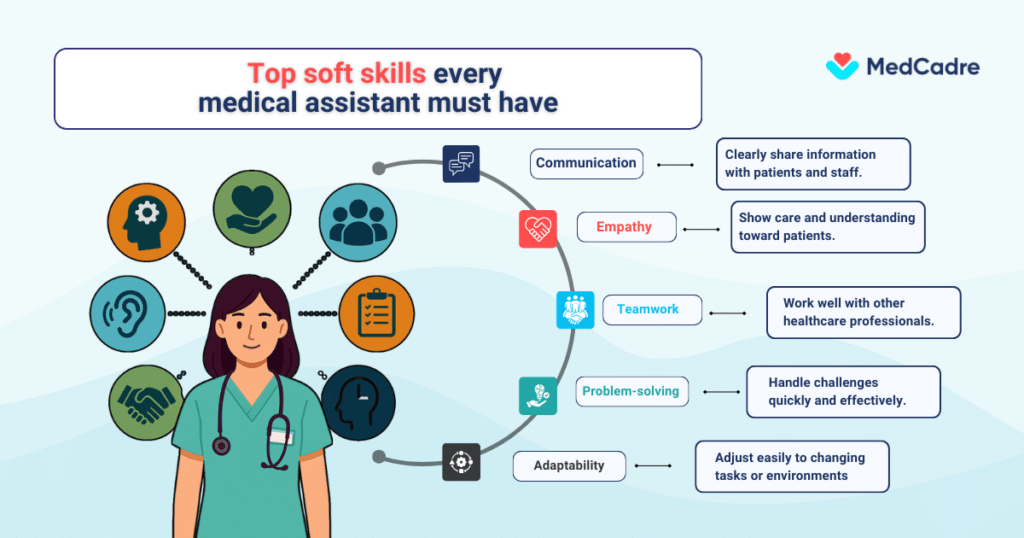
For example, if you want to apply for a medical assistant (MA) role, keeping your soft skills can make you stand out. The time you invest today in improving your skill sets keeps you apart from others who apply for the same position. An infographic related to soft skills has been added for better understanding.
Use professional network and career platforms
Networking can be key when you change healthcare jobs. Joining professional associations and online communities helps you build connections with peers and recruiters. These connections can consider you for available positions.
For example, you might apply for an LPN role through these networks to connect with trusted employers and opportunities.
Online portals such as LinkedIn are powerful tools. To use these tools, you need to optimize your profile and engage by commenting on or sharing industry posts. Mentors and recruiters in your field can provide guidance during your career transition. They can also share opportunities you may not find elsewhere. Networking can help you discover positions that are not even advertised.
- Attend job fairs, virtual summits, and networking events to meet employers.
- Connect with mentors who can advise on your career transition.
Also read: How to build a professional online presence as a healthcare worker.
Plan your transition and take action for an easy job change
Having a plan makes it easier to transition smoothly into a new healthcare role. When resigning, take a professional approach. Leave on good terms to maintain references and relationships for future applications.
Prepare for behavioral and clinical interviews before joining. Research about salaries, particularly how much compensation you can get in your desired area.
Make sure you can clearly demonstrate your experience and skills. Next, learn about the work culture in your new environment. Adjust to new responsibilities as you go.
You also need to handle emotional and financial aspects that may come up during the transition. Planning and conducting proper research on checklists, such as those related to salaries, helps reduce stress and makes it easier to step into your new position with confidence.
For example, if you apply for a Licensed Practical Nurse (LPN) role in your desired areas, you must know the salary range in each location. This helps you negotiate your salary when joining a new job. A detailed infographic has been added to provide information about this role throughout the process.
Top-paying metropolitan areas for licensed practical nurses
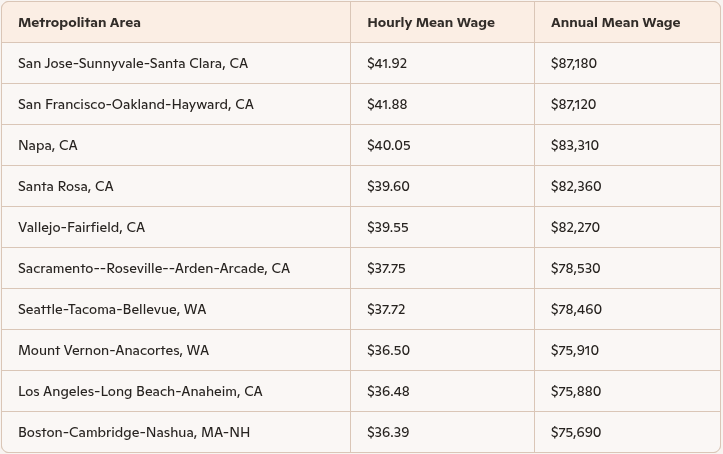
Source: www.bls.gov
How the right staffing platform simplifies healthcare career transitions
Healthcare professionals seeking to change jobs for career advancement must develop market-appropriate skills. Any new job in the healthcare sector requires meeting basic qualifications, certifications, experience, and flexibility, all of which enhance your career path.
These skills may only get you halfway. The rest depends on the staffing platform you choose to find the right jobs.
Many professionals like you either search for openings or submit resumes on free job boards, but these platforms may not deliver the results you want. Then professionals like you may turn to a traditional staffing agency, which may leave you waiting longer than necessary. These traditional staffing agencies may lack personalization and speed, resulting in unnecessary delays in placement.
You can avoid these delays by selecting a modern staffing platform that helps you quickly find jobs in your preferred area, aligned with your expertise. That is where MedCadre comes in.
This AI-enhanced platform allows healthcare professionals to locate better opportunities more effectively. You can easily view current openings and submit resumes to employers. It offers multiple benefits and simplifies every step of the career transition process.
Benefits of MedCadre include:
- PPO health insurance with optional dental, vision, and life insurance.
- Various assignment types, including contract, per diem, long-term, and locum tenens.
- Dedicated HR, Payroll, and Timesheet teams that resolve concerns promptly.
- An AI-driven credentialing system that speeds up processing by nearly 30%, ensuring you start assignments on time.
- An AI-integrated timesheet that secures quick approvals and accurate, on-time payments.
- A transparent pricing structure that ensures fairness and clarity for both employers and professionals.
MedCadre empowers healthcare professionals like you to explore current openings on the page to apply for jobs. If you cannot find a job role that fits your requirements, you can submit your resume with basic details.
Experienced recruiters from MedCadre will contact you once a job that fits you becomes available. It helps you achieve your career goals and advance confidently within today’s evolving healthcare careers landscape.
FAQs
How can I successfully change careers in healthcare?
You can start by clarifying your career goals. Updating your credentials, researching the job market, networking, and planning your transition carefully. Each step ensures you move confidently and align with your long-term aspirations.
How important is maintaining credentials when changing jobs?
It is crucial to update your licensure, certifications, and skills to remain competitive and eligible for new roles in your chosen specialty.
Should I consider different practice settings when changing jobs?
Yes. Consider hospitals, telehealth, private practices, and long-term care. The setting should align with your preferred work style and career goals.
How does MedCadre make changing healthcare jobs easier?
It accelerates credentialing by nearly 30%, provides AI-integrated timesheets for timely payments, and gives professionals direct access to current healthcare career openings.
Can MedCadre help me find jobs in my preferred location?
Absolutely. The AI-powered platform provides results that help you apply for the roles you want in your specific area, aligning with your career goals.