If you are a working professional and have chosen a career in the healthcare sector is an encouraging decision, especially with the growing demand for pharmacist jobs across the United States, particularly in states like California, where opportunities continue to expand.
Whether you are considering retail pharmacy or hospital pharmacy, each path offers its own set of growth opportunities, challenges, and work environments.
As a pharmacist, the healthcare setting you choose can shape your daily routine, influence your work-life balance, and impact your overall job satisfaction.
This blog will give you a detailed understanding of the key differences between retail and hospital pharmacy roles. This knowledge will help you choose the right role in California, even if you are considering a job role transition.
Key differences between retail and hospital pharmacy roles
Retail pharmacists are the professionals most familiar to the public. They work in chain pharmacies, retail department stores, or independent pharmacies.
If you are a healthcare professional considering a transition to retail or hospital pharmacist roles, it is important to understand how these roles differ before applying.
As a retail pharmacist, you will focus on dispensing medications, giving vaccinations, providing over-the-counter guidance, managing patient records, and supervising pharmacy technicians.
To work in retail pharmacy, you need a valid pharmacist license from your state board of pharmacy and may pursue certifications from recognized bodies such as the Board of Pharmacy Specialties (BPS) or the American Pharmacists Association (APhA).
On the other hand, if you are interested in hospital pharmacists’ roles, you must understand that your primary work is within hospitals and clinical settings.
They are involved in clinical reviews, medication management, risk-benefit assessments, and patient-centered care. Hospital pharmacists also collaborate closely with doctors, nurses, and other healthcare professionals to optimize treatment plans.
Understanding these differences helps you make an informed choice about which career path aligns with your skills, interests, and long-term goals. The detailed responsibilities are outlined below for better understanding.
Key responsibilities of a retail pharmacist:
- Patient interaction: Provide medication guidance, answer health-related questions, and build trust with customers.
- Prescription dispensing: Accurately review and fill prescriptions while ensuring compliance with safety regulations.
- Medication counseling: Educate patients on dosage, side effects, and proper medication usage.
- Inventory management: Monitor stock levels, manage supplies, and ensure medication availability.
- Regulatory compliance: Follow legal and safety standards to maintain pharmacy operations
What does a hospital pharmacist do?
The role of a hospital pharmacist is incredibly diverse. These professionals are involved in every aspect of patient care, from medication reviews in the pre-admission clinic to post-discharge care.
They actively participate in ward rounds as part of a multidisciplinary team, contributing significantly to patient well-being.
Key responsibilities of a hospital pharmacist encompass, but are not limited to:
- Taking detailed medication histories from patients to ensure accurate records and safe prescribing.
- Conducting clinical reviews to identify potential problems in patient care and applying clinical reasoning and decision-making around medications.
- Performing risk versus benefit assessments to provide patient-centered care tailored to individual needs.
- Providing counselling and education to patients, their families, carers, and other healthcare professionals about medications and treatment plans.
- Dispensing and checking medications to guarantee accuracy and safety in all administered therapies.
- Communicating critical information about patients and their medications to other healthcare professionals to ensure coordinated care.
Why choose California for a pharmacist job
California is one of the most advanced states in the USA. It has modernly equipped clinics, pharmacies, and hospital units that require the support of skilled pharmacists.
If you are looking for a job in California or considering shifting to a new state for better career opportunities, California offers a thriving healthcare ecosystem with high demand for skilled professionals.
With several hospitals and specialty clinics with growing patient populations, you can find allied healthcare careers that fit your professional goals.
Because of the expanding medical services in states like California and increasing patient needs, allied healthcare professionals are in demand across many facilities.
Along with this, California has numerous medical research organizations that consistently provide jobs for those working in the industry or seeking to enter it.
Additionally, a growing number of professionals in California can expect to find competitive salaries, workplace diversity, and plenty of opportunities for career advancement.
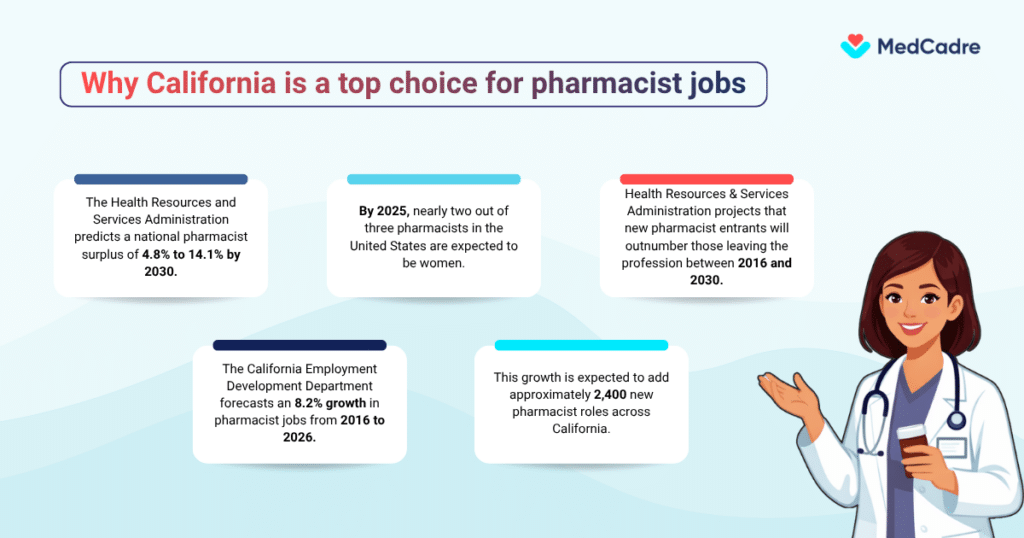
A detailed infographic is provided below to help you understand the key factors driving the growing demand for allied healthcare professionals.
Essential certifications to work as a pharmacist in California
If you are a healthcare professional and are planning to pursue pharmacist jobs in California, ensure that you have earned a PharmD degree and passed exams such as the NAPLEX and CPJE to become licensed.
These certifications are required whether you choose retail roles or hospital pharmacy jobs, where you will work closely with clinical teams in facilities.
If you are exploring hospital pharmacy opportunities, begin by making sure you meet all state licensing requirements for pharmacists. This ensures you’re fully qualified before applying and increases your chances of landing the right role.
Being certified is important because once you have all the permissions to work, you will have more flexibility to choose the role that best fits your professional goals.
Pharmacist salaries in California: What you need to know
California has a large population, and its aging population is also more prevalent. For this reason, California offers some of the highest salary ranges in the nation for pharmacists. One more reason for the high salaries is the cost of living.
If you are a professional looking to apply for hospital pharmacist jobs, you will notice that wages are often more competitive than in other states.
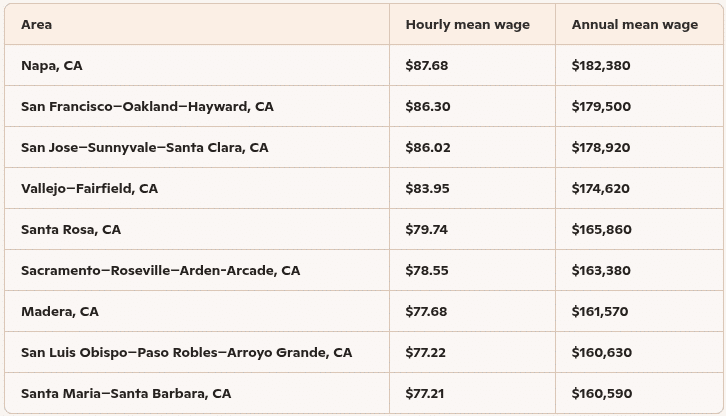
It is important to understand the current salary details in different areas. Knowing the hourly and annual pay helps you negotiate confidently and secure a better pharmacy job with a strong salary, especially in roles like retail pharmacist positions.
A detailed infographic highlighting the top-paying metro areas in California is provided to help you plan your job applications more effectively. Here are the top-paying metropolitan areas in California for pharmacists, along with their hourly and annual mean wages.
Top-paying metropolitan areas in California for pharmacists
Source: BLS
How to find which job role fits you?
Choosing between a retail and hospital pharmacy is a personal decision.
Picking a role depends on many factors, including what matters most to you in your day-to-day work.
For example, if you want to apply for a retail pharmacist job, make sure to understand that you often operate in fast-paced environments focused on patient interaction and prescription fulfillment.
On the other hand, your hospital roles involve more clinical responsibilities and collaboration with healthcare teams.
As you explore different pharmacist roles, it is important to understand which role best aligns with your skills and interests.
A working professional like you should consider key factors such as work schedules, check for burnout risks, patient interaction levels, and research into the facility you choose to work at before choosing a role.
Remember that finding the right work-life balance between your professional life and personal life is essential for job satisfaction.
When exploring retail pharmacist opportunities, you should also pay close attention to factors such as shift patterns and the pace of the work environment.
Taking the time to research and assess your priorities will help you choose a role that not only fits your professional goals but also supports your growth.
Why choosing the right platform matters for pharmacists
It is advised to gain knowledge about the roles you want to work in because understanding the differences between retail and hospital roles will help you focus on where you can apply.
As a professional, if you are exploring pharmacist jobs, you must also research the right platform that can help you find better opportunities.
If you are considering options like retail pharmacist jobs or hospital roles, you must know that relying on traditional agencies can slow down your process of landing your dream job on time.
This is because many of these platforms operate manually and lack clear communication, proper onboarding support, and transparency during the hiring process.
In the same way, choosing a free job portal can also bring challenges, as it may have unverified jobs and lack transparency.
To avoid challenges, you must opt for a modern staffing platform that makes your job search more efficient and easier.
Pharmacy staffing platforms like MedCadre are a better option because they use AI technology to create a flexible, easy-to-use platform.
As a pharmacy professional who is in search of a job, you can manage your job search while continuing your current responsibilities.
The platform also follows a transparent pricing model, allowing you to receive a significant portion of your billable costs.
Additionally, it offers 30% faster credentialing than traditional agencies, helping you start your role sooner.
If you are a healthcare working professional who is looking for better-paid pharmacist jobs, you can regularly review the current openings page to explore retail pharmacist jobs or other healthcare roles that align with your experience.
If you do not find an immediate role match, you can submit your resume, which allows you to receive updates on upcoming pharmacist roles. Choosing the right support from a staffing platform will ease your job-searching process.
FAQs
How can I find pharmacist jobs near me?
To find suitable jobs, you must start by searching on job portals, healthcare staffing platforms like MedCadre, and hospital career pages. You can also filter roles by location, setting retail or hospital, and experience level to find opportunities that match your preferences. On MedCadre, you can easily browse verified job listings, apply directly, and track your application status, making the process faster and more streamlined.
Where can I specifically apply for retail pharmacist jobs near me?
If you are searching for jobs, focus on large pharmacy chains, grocery store pharmacies, and independent drugstores in your area. Check their official career pages regularly, as retail roles are updated frequently.
What skills are important to succeed as a pharmacist?
Key skills include attention to detail, strong communication, problem-solving, teamwork, adaptability, and a solid understanding of medications and patient care
How can I find hospital pharmacy jobs near me through MedCadre?
If you are looking for hospital pharmacy jobs near you, start by exploring opportunities on MedCadre, which connects pharmacists with top hospitals and facilities across the US. Make sure your state pharmacist license is active and up to date. You can also leverage professional pharmacy networks and connect with current pharmacists in your area.
What types of pharmacist jobs can I find and apply for through MedCadre?
You can explore a wide range of opportunities, including retail and hospital pharmacist roles, clinical pharmacy positions, and specialized roles, depending on your qualifications and career goals.