Radiologic technologists, also known as radiographers, use imaging techniques to perform medical exams on patients using X-rays to create images of specific parts of the body. A skilled technician plays a crucial role in ensuring accurate imaging results that support proper diagnosis.
The images are then used by physicians and surgeons for diagnosis and disease monitoring.
Radiographers also care for patients and prepare them for medical tests. They also move patients into the correct position, operate the equipment, and use their knowledge to minimize the patient’s radiation dose.
Radiologic technicians mostly work in hospitals, outpatient clinics, and physicians’ offices, often performing X-rays, CT scans, and MRI scans.
These professionals, also known as rad techs, play a vital role in patient care and healthcare services.
Many healthcare students actively explore radiologic technologist careers because of the stability and growth associated with this profession.
If you are interested in the healthcare industry and have a passion for technology, choosing radiology tech might be the perfect career path for you.
There is a lot to consider when it comes to salary potential and job growth.
In this blog, you will learn more about a radiologic technician, including whether this job role is really in demand, the job outlook, and salary details, which will help you choose and land in your preferred location.
Check if the radiology technician job role is in demand or not
As a healthcare professional looking to transition or a graduate planning to apply for radiologic technician jobs, you must ask yourself: Are radiologic technician jobs really in demand?
To answer your question, we can say yes, these roles are in high demand, and many healthcare facilities consistently post radiologic technologist jobs across different states.
It is due to the increasing need for diagnostic imaging procedures across various medical settings, from hospitals to outpatient centers.
One more reason is the aging population, and the need for skilled radiology techs continues to grow.
Additionally, advancements in medical imaging technology are contributing to the rising demand for qualified radiologic technologists in both urban and rural healthcare facilities.
This high demand leads to multiple job opportunities and well-paid salaries.
Why choose this job role
You can choose radiologic technology, as it offers a stable, respected career. It allows professionals like you to play a direct role in diagnosing and treating patients through advanced imaging procedures as a radiologic technologist.
This health care role also offers strong earning potential and career growth opportunities.
Many professionals researching radiologic technologist careers appreciate the balance between technology-driven work and patient interaction.
Salary range considerations
There are multiple factors that can influence the salary range for radiology techs in the USA.
The factors include supply and demand for radiology services, experience, geographical location of the job, education, and additional certifications.
If you are a fresher radiologic technologist, you typically start on the lower end of the salary structure.
Your salary gets increased as you gain experience and obtain the required certifications.
Education also plays a significant role in determining salary. When evaluating your expected radiologic technologist salary, it is important to compare state-level compensation trends.
Radiologic techs with an associate degree can expect to earn less than those with a bachelor’s degree or higher.
Advanced degrees often open doors to leadership positions, specialized fields, and higher pay.
When you are planning to apply for a radiologic technician job role in the USA, you must be aware of the current compensation numbers related to a radiologic technologist position.
Knowledge of the current salary trends will help you negotiate and secure higher wages for your role. Reviewing updated radiologic technologist salary data can strengthen your negotiation strategy during interviews.
For better understanding, an infographic showing salaries by area in the USA has been added.
Annual wage of radiologic technologists in the USA, state by state

Source: BLS
Job outlook and market demand
If you are a healthcare professional wondering about the current job outlook for this position in the USA, we can say it is promising.
According to the Bureau of Labor Statistics, employment of radiologic technologists is expected to grow 6% from 2022 to 2032.
This growth percentage is faster than the average for all occupations.
This job growth is driven by the increasing number of facilities and the growing need for diagnostic imaging.
Radiology techs who specialize in advanced imaging techniques are likely to enjoy even better job prospects, especially when applying for competitive radiologic technologist jobs in specialized departments.
Career growth and advancement opportunities
There are multiple factors that can help you grow in your career as a radiologic technician.
As a healthcare professional, you must understand these opportunities in detail.
This knowledge will help you plan your career growth within your desired time frame.
These advancements can also guide you toward specialization in specific imaging areas such as MRI or CT scans.
Specializing can increase your earning potential and expand your job opportunities as a radiologic technologist.
Maintaining a specialization: In the evolving healthcare market, it is a better plan to specialize to boost your career as a radiologic technician.
For example, if you are a radiology technician, you must consider and pursue certifications in MRI or CT imaging.
These certifications often earn higher salaries than those performing routine diagnostic radiography. With these certifications, you can achieve good promotions, and they are explained below.
- Leadership roles: As an experienced radiologic technician, you can move into leadership positions after a few years in the role. Your facility may consider you for managerial or team leader responsibilities. In these roles, you will supervise and guide a team of radiology technicians.
- Teaching: Many experienced healthcare professionals enjoy teaching aspiring radiologic technologists at technical schools or universities. As a skilled professional, if you enjoy sharing your knowledge, then teaching will be a suitable option with decent compensation.
- Advanced education: Skilled radiology technicians like you may not only settle for a Bachelor’s degree; most professionals may want to advance their career in other directions, such as pursuing a Master’s degree, clinical research, or higher-paying positions in healthcare management.
Transitioning into radiology tech from another role
For professionals already in the healthcare sector, transitioning into radiology tech jobs can be a stress-free step.
Specific roles such as medical assistants, EMTs, or surgical techs often involve a foundational understanding of anatomy and patient care, and can make the switch effortlessly into a radiologic technologist role.
The following are the steps help you for a smooth transition:
- You must enroll in an accredited radiologic technology program (this may take 18–24 months).
- Make use of existing credits or experience to make an easy transition if you have similar responsibilities.
- Secure and pass the ARRT certification exam.
- Search and attend on-the-job training options or online certification courses at your current facility or clinic.
These valuable steps will help you make a hassle-free transition.
How to decide if this is the right role for you
Whether you are an experienced professional who is planning for a role transition or a new graduate who is looking for a radiology technician job.
It is a better option to think, cross-check, and know all the options that help you.
You should also take time to check whether a career in allied healthcare truly aligns with your interests, strengths, and long-term professional goals.
In addition to these options, you must also cross-check whether you have relevant skills and experience with the imaging machines.
While you are planning for the transition, it is essential to know the required skills for this role.
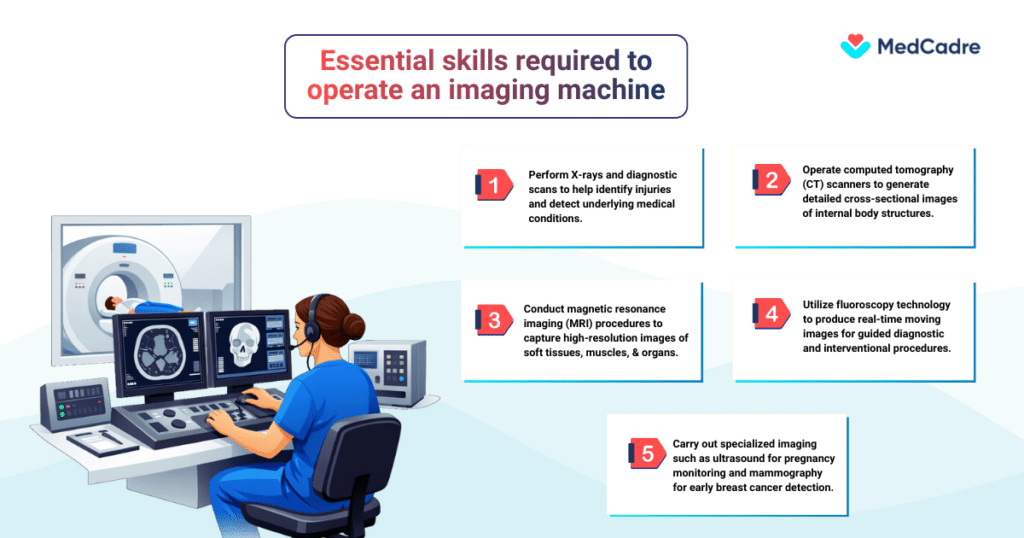
A detailed infographic related to the most essential skills to operate an imaging machine for this role has been added, so you can review it before applying for a job.
One more essential point to review is carefully considering job descriptions, daily responsibilities, physical demands, and growth potential before pursuing long-term radiologic technologist careers.
Knowing job descriptions in detail is crucial before joining any role, as it helps professionals make informed career decisions.
Choose the right career move with the right platform
Before choosing a better job, evaluate key factors such as job growth, job outlook, and salary range.
These elements help you understand long-term stability and earning potential.
When you review these details carefully, you make smarter career decisions.
You must also understand the process required to secure the role you want.
A successful job search depends not only on qualifications but also on choosing the right platform.
The platform you select can directly affect your hiring speed, pay transparency, and overall experience while applying for radiologic technologist jobs.
Avoid traditional staffing agencies because they often limit transparency and reduce control over your job options.
Many agencies take a large share of the billable rate, reducing your actual earnings.
Free job portals can also pose challenges, including unverified listings, intense competition, and slow communication.
To avoid these issues, choose structured platforms like MedCadre.
This modern healthcare platform allows you to explore verified physical therapy opportunities that match your skills and preferences.
The process is transparent, structured, and easier to navigate, with credentialing that is 30% faster than traditional staffing methods.
You can manage your job search at your own pace while continuing your current responsibilities.
The transparent pricing model helps you receive a significant portion of your billable rate.
In addition, the AI-integrated timesheet system ensures accurate approvals and timely payments by reducing administrative delays.
With the right preparation and the right platform, you can confidently secure a role that supports your long-term professional growth
As a healthcare professional planning to take the next step, you can regularly check the current openings page to stay up to date.
You can also submit your resume with basic details to explore new roles that align with your preferences and long-term career goals.
FAQs
Is there a strong job outlook for radiologic technologists?
Yes, demand remains steady in the USA. It is due to the need for diagnostic imaging services. An aging population increases the need for medical imaging and evolving trends in the medicalimaging technology. This supports long-term job stability.
What education is required to become a radiologic technologist?
Most professionals complete an accredited associate or bachelor’s degree program. Clinical training is also required. Graduates must pass a certification exam to practice. Typically, candidates earn an Associate of Applied Science (AAS) in Radiologic Technology from a program accredited by the Joint Review Committee on Education in Radiologic Technology (JRCERT).
Are certifications important in this field?
Yes, certification improves job prospects and earning potential. Many employers prefer certified professionals. Advanced certifications can open doors to specialized roles. A professional can obtain the Registered Technologist (RT) certification awarded by the American Registry of Radiologic Technologists (ARRT).
How can I find radiologic technologist jobs near me?
You can search on reliable healthcare job platforms that post verified openings. MedCadre helps you explore updated job postings, you can compare pay details, and apply directly to healthcare facilities. This makes your job search faster and more structured.
Why should I choose MedCadre for my job search?
You should choose MedCadre because it helps you start working sooner with credentialing that is 30% faster than traditional staffing methods. This means fewer delays and a quicker onboarding process. The AI-integrated timesheet system also ensures accurate approvals and timely payments.