After numerous years of rotating shifts in work life, many missed family events, and constant tiredness, a lot of professionals in nurse jobs begin to question the long-term sustainability of the situation. Because of the above mentioned situations, burnout continues to affect nurses in every healthcare setting.
This is shifting work-life balance from a luxury to a necessity. With growing patient demands, professionals are reconsidering their nursing careers and seeking new positions that allow them to remain in healthcare while providing the stability they need.
Roles that provide a low-stress nursing environment attract career changers, students start planning ahead to land in stress-free jobs, and professionals with experience search for jobs that offer balance.
This blog offers details on low-stress nursing jobs that allow nurses to stay in the profession, regain control of their time and energy, and, most importantly, their lives.
What makes a nursing job low-stress?
Low-stress nursing jobs often include predictable routines, without juggling too many patients at once or dealing with many high-acuity situations. Because of this, there is little urgency, and the nurse can focus on quality of care rather than constantly responding to crises.
More traditional nursing roles often include the burden of your shifts and the emotional labor of critical outcomes. All of this can lead to a high impact on performance, health, and overall nursing career satisfaction over time.
Nursing jobs with structured schedules and fewer overnight shifts, and more steady patient populations tend to be a lot less stressful.
Top low-stress nursing jobs to consider
What most people assume is that all nursing jobs remain at the bedside, but it is a misconception. Nursing is a profession with plenty of career options that remain purposeful while still providing balance between work and personal life.
School nurse
During school hours, school nurses provide basic medical care, support chronic condition management, and promote student wellness.
This role is considered low-stress because work and school hours follow the same academic calendar. There may be no emergencies, and the chronic condition management and wellness support are mostly predictable.
Average median annual salary: $ 56,000 – $ 78,000
Nurse educator/instructor
Nurse Educators teach nursing students, develop education programs, and teach clinicals when needed. These nurses also supervise and assess future nurses in the needed competencies.
Nurse instructors focus on teaching rather than on urgent care. They also have set hours and less physically demanding work, so they have a better balance between their professional and personal lives.
Average median annual salary: $ 67,000 – $ 100,000
Case management nurse
Case management nurses draft and manage patient care plans and address discharge plans. They also collaborate with the care team to ensure continuity with patient care.
These nurses can perform their duties in an office or remotely. There are a few emergencies, and the work pace is consistent.
Average median annual salary: $ 57,000 – $ 81,000
Telehealth nurse role
Telehealth nurses evaluate patients remotely and provide instructions and guidance for further care. They assist patients beyond the clinical environment.
There is no bedside responsibility, the job is not physically demanding, and many positions are now available remotely. This provides flexibility and improves work–life balance.
Average median annual salary: $ 56,000 – $ 86,000
Public health nurse
The role of public health nurses may include providing education, preventing disease, and working with the community on programs.
Public health nurses work with groups of individuals to encourage healthy lifestyles and reduce the incidence of disease.
Emphasis on long-term outcomes, predictable work hours, and minimal emergency response contribute to the low-stress working environment in which public health nurses operate.
Average median annual salary: $ 58,000 – $ 84,000
Skills that support low-stress nursing roles
Good communication helps nurses manage expectations and avoid creating stress. Stress is a consequence of poor communication, so conversations focused on specific tasks improve workflow across a variety of nurse roles.
Nurses who practice time management and stay organized avoid last-minute rushes. Those who plan in advance seem to enjoy their work more and see their nurse salary increase more over time.
Confidence comes from knowledge, and uncertainty comes from a lack of knowledge. When uncertainty is reduced, the transition to low-stress nursing jobs becomes much easier.
For example, as a working professional, having clarity about your skills and preferences makes it easier to apply for nurse jobs that truly align with your goals.
To make this process easier for working professionals, a detailed infographic with clear tips on choosing low-stress nursing roles has been added.
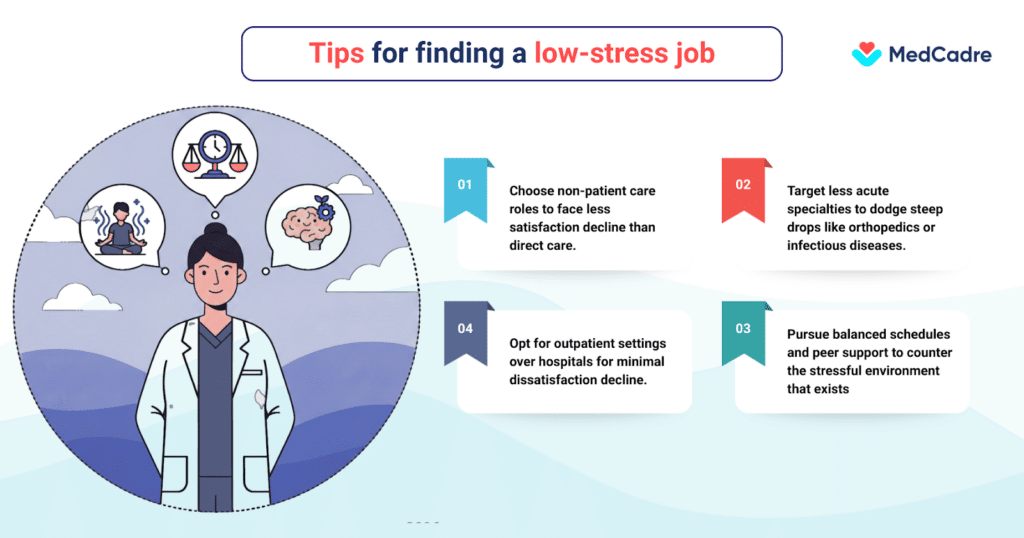
How to choose the right low-stress nursing job
Working professionals like you must recognize which factors in traditional nursing jobs contribute most to burnout: work shifts, patient types, or patient volume?
Finding and recognizing the right balance between a professional lifestyle and long-term career aspirations is crucial to work-life balance. A professional like you must make sure what role will be aligned with your priorities, meaning your career in nursing, and what situations will be more stable, and there will be more professional development opportunities.
When you are skimming job postings to identify suitable nursing roles in your area, you must consider factors such as set schedules, available support, and manageable patient loads.
Along with this, as a working professional, you must also understand how to write and edit your resume and highlight which skills and achievements to on your resume, as this can significantly improve your chances of securing these happier nursing positions.
Tips to achieve work-life balance as a nurse
Establish limits. Schedules and availability can be stretched easily. Nurse burnout is equally as problematic as overcommitment – regardless of the nurse’s salary.
Mental and physical health come first. Recovery and rest are essential and should be prioritized. Performance is a marathon and not a sprint – short-term productivity is not worth the long-term consequences.
Social support and balance are crucial as evolving nurse jobs add new complexity to the role. Systems of support and education empower nurses to balance the new demands. As a working professional, you must also prepare for interviews effectively by understanding what staffing managers expect from you in your role
As a working professional, understanding how to achieve work-life balance becomes essential, and to make this easier, a detailed infographic is included to clearly explain practical ways to build and maintain that balance.
Top strategies achieve work-life balance
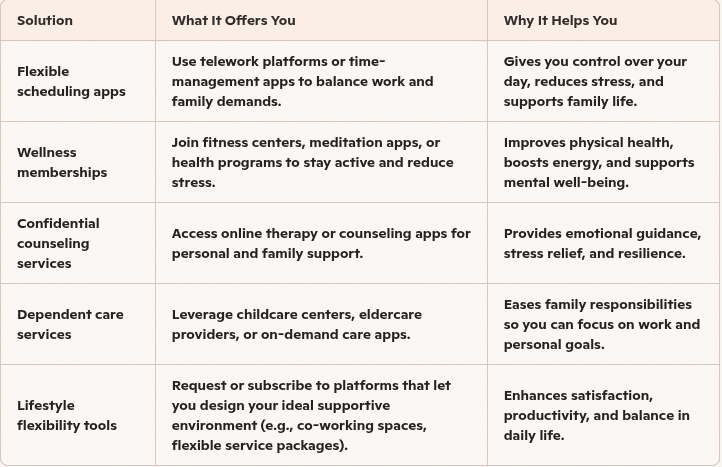
Source: Office of Personnel Management
Choosing the right staffing platform for low-stress nursing jobs
Selecting the best low-stress nursing jobs will enable you to stay active while shielding your personal life.
Managing life with low stress will improve your performance and overall career satisfaction.
Many professionals like you may experience challenges when collaborating with traditional staffing agencies due to a lack of transparency and slower processing times.
These platforms are also associated with higher long-term costs. These challenges and unavoidable costs may delay your search.
To resolve a situation that is delaying your job search process as a working professional, you must choose a better staffing platform that aligns with your requirements.
MedCadre is a simplified portal with a transparent pricing structure that helps you receive a competitive nurse salary. This platform is also powered by AI, which speeds up credentialing by 30%.
With timesheets and payments processed on time, MedCadre offers a flexible application process that lets you seamlessly manage your job search while continuing your current role at your own pace. This helps nurses to concentrate on developing a stable and fulfilling career.
To stay ahead in your career, as a working professional, you can regularly review the current openings page to explore nurse opportunities that align with your experience. If you do not find an immediate match, you can submit your resume, which allows you to receive updates on upcoming roles as they become available. With the right support of a modern platform, nurses’ work can be a stress-free job.
FAQs
Can I move into a low-stress nursing job near me without leaving healthcare?
Yes. Many low-stress healthcare roles allow you to stay in that role while stepping away from bedside intensity. Positions like school nurse, case management nurse, or nurse educator keep you connected to patient outcomes in a more structured way
Are low-stress nursing jobs suitable for experienced nurses only?
No. These roles work well for new graduates, mid-career nurses, and professionals planning a career shift. Students often plan early for these paths, while experienced nurses transition to regain balance
What skills help nurses succeed in low-stress roles?
Strong communication, time management, and organizational skills make a big difference. These skills reduce misunderstandings, improve workflow, and help you manage responsibilities without constant pressure.
What is MedCadre, and how does it help nurses find jobs?
MedCadre is a modern staffing platform designed to help nurses find the right roles faster and with less stress. It connects you to opportunities that match your skills, preferences, and availability while simplifying the entire hiring process.
How does MedCadre use AI technology for nurses?
MedCadre uses AI-powered tools to more accurately match nurses with suitable roles. This technology speeds up credentialing by up to 30%, helping you move into new roles faster without the need for repeated paperwork.