For many certified nursing assistants (CNAs) in the United States, comparing CNA vs LPN is often the first step when considering career advancement. One common progression is moving from a CNA to LPN, a transition that not only brings greater responsibilities but also provides higher compensation and opportunities for professional growth.
If you are a CNA contemplating this change, understanding the differences in duties, educational requirements, and salary expectations can help you make an informed decision. This shift also opens the door to specialty certifications and higher-level nursing roles, which are valuable for long-term career satisfaction. By planning, you can align your career goals with financial stability and continuous development.
Comparing CNA and LPN roles in patient care
Certified nursing assistants (CNAs) play a crucial role in patient care, focusing on assisting with daily activities and ensuring the comfort and well-being of individuals under their care. CNAs typically provide hands-on assistance with tasks like bathing, dressing, and feeding. Their responsibilities also include monitoring vital signs, reporting changes in patient conditions, and offering emotional support to patients and their families.
For many professionals, comparing CNA vs LPN becomes an important motivator, as understanding the differences in pay highlights the value of advancing to higher roles in nursing. Licensed practical nurses (LPNs) operate with a more advanced scope of practice compared to CNAs. LPNs administer medications, monitor patients’ health, perform wound care, and collaborate with other healthcare professionals to develop and implement patient care plans.
They bridge the gap between CNAs and registered nurses (RNs), providing a valuable link in the healthcare team. Overall, LPNs earn a higher salary compared to CNAs due to their expanded responsibilities. These differences clarify the CNA vs LPN pathway for advancement.
Additional experience requirements for aspiring LPNs
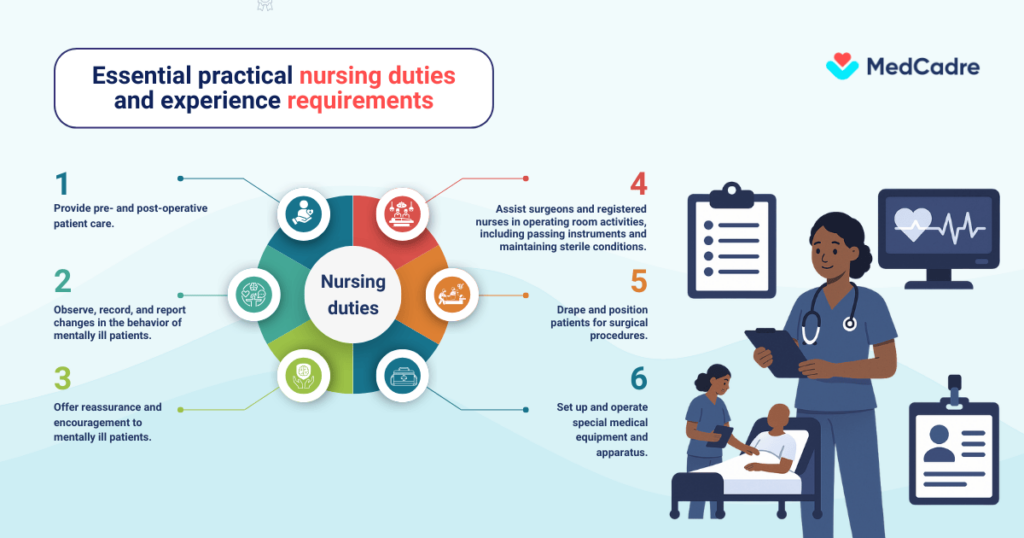
Suppose you are a grade GS-4 (an entry-level position requiring at least six months of experience providing basic patient care in a medical setting) nurse who has completed several months of nursing experience. In that case, you will also have additional vital requirements, such as qualifying experience in nursing care work in hospitals, outpatient clinics, nursing homes, or other supervised facilities where knowledge of body structure, sterile techniques, and patient care procedures is required. These details are presented below in infographic form for better understanding.
Transitioning through the educational pathway to LPN
Transitioning from CNA to LPN requires a structured educational plan to advance in your career successfully. By completing a state-approved LPN program, you gain both the theoretical knowledge and practical skills necessary to excel in clinical environments. For CNAs interested in specialty areas, enrolling in a CNA to LPN bridge program can provide an accelerated path toward licensure while recognizing your prior experience.
Additionally, understanding the curriculum, prerequisites, and clinical rotation requirements ensures you are fully prepared to meet state licensing standards.
- High school diploma or GED: Begin by obtaining a high school diploma or equivalent to establish a solid foundation in academic skills.
- Enroll in a state-approved LPN program: Complete a 12–18 month program at a community college, vocational school, or technical institute. Ensure the program is accredited by recognized bodies such as ACEN or CCNE.
- Program curriculum: Courses cover anatomy, physiology, pharmacology, and patient care, alongside hands-on clinical rotations.
- Prerequisites and admission: You may be required to complete specific courses in biology and mathematics, pass entrance exams, submit letters of recommendation, and undergo background checks.
- Clinical training: Gain practical experience in patient assessment, medication administration, wound care, and health promotion.
Leverage your CNA experience to enhance practical skills during clinical rotations, volunteer for tasks like assisting with patient assessments, and actively participate in care planning meetings to demonstrate readiness for higher responsibilities.
Licensing and certification steps for LPNs
To successfully move from CNA to LPN, understanding the licensing and certification steps is essential. Completing these steps ensures you meet state regulations and qualify for competitive positions.
For many candidates in CNA to LPN bridge programs, the transition is faster since prior CNA experience is recognized. Proper licensure also allows you to pursue specialty certifications, which can further boost your salary and career prospects.
- Pass NCLEX-PN: Successfully complete this national exam to become eligible for LPN licensure in the U.S.
- Apply for state licensure: Submit transcripts, exam results, and required paperwork to your state nursing board.
- Background checks: Complete fingerprinting and criminal history checks as required by most states.
- Continuing education: Take state-approved courses to keep your knowledge current and maintain an active license.
- Specialty certifications: Earn credentials in areas like pediatrics, geriatrics, or IV therapy to expand career options.
- License renewal: Renew your license on time, following your state’s guidelines for CE hours and documentation.
Following the above steps ensures a smooth transition from CNA to LPN and enhances your marketability in the job market.
CNA vs LPN salary overview
In the broader discussion of CNA vs. LPN, moving forward is often both a professional milestone and a financial upgrade. The shift provides nursing assistants with the opportunity to build stability through higher earnings while expanding their role in patient care.
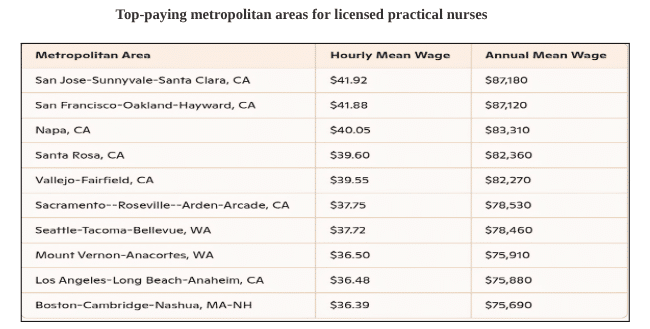
When comparing CNA vs LPN salaries, it is wise to consider the cost of living in different regions, as larger cities typically have higher expenses. With this insight, you will be better equipped to identify opportunities that align with your needs. A detailed infographic is provided below to give you proper insights into salaries across the USA.
Source: www.bls.gov
Career growth after becoming an LPN
LPNs have multiple pathways to career growth, making the transition from CNA to LPN a strategic investment. Pursuing specialty certifications allows you to gain expertise in areas such as pediatrics, geriatrics, or IV therapy. Choosing the CNA to LPN transition further expands opportunities, enabling you to advance toward your career goal.
Continuing education and workshops help keep skills up-to-date and can aid in transitioning into leadership roles. According to the U.S. Bureau of Labor Statistics, employment of licensed practical nurses is projected to grow three percent from 2023 to 2033, about as fast as the average for all occupations.
Navigating your CNA to LPN transition with the right support
As an individual planning to transition from CNA to LPN, it is essential to remember that this step marks the beginning of your long-term career journey. Once you complete all necessary certifications, licensing exams, and documentation, the next stage is to find a job that aligns with your goals and lifestyle. Securing the right opportunity may take time, and this is where your approach to job searching becomes crucial.
Relying solely on traditional staffing agencies can slow down your progress. Many of these agencies come with challenges such as limited job transparency, slower response times, and fewer personalized matches for your skill set. If you are wondering, “where to get well-paid LPN jobs near me?”, then relying on these traditional staffing agencies can be time-consuming. Instead of facing these barriers, healthcare professionals can achieve quicker and more reliable results by partnering with modern staffing platforms, such as MedCadre.
MedCadre specializes in healthcare staffing and is designed to connect professionals directly with healthcare facilities that are actively hiring. Some of the key benefits include:
- MedCadre’s streamlined application process enables you to manage your job search effortlessly, ensuring that your current responsibilities remain uninterrupted.
- Our pricing model guarantees that a significant portion of the bill rate is allocated directly to your pay, providing you with a clear and equitable understanding of your earnings.
- This staffing platform utilizes AI-driven technology to accelerate the credentialing process by 30%, enabling you to begin your new assignment on schedule.
- MedCadre’s integrated timesheet ensures timely approvals, enabling you to receive your payments accurately and on schedule.
To stay ahead, make it a habit to regularly check MedCadre’s current openings page. If you do not see an immediate match, you can submit your resume with basic details for consideration for future opportunities. By leveraging a platform built specifically for healthcare professionals, your path from CNA to LPN can become smoother, faster, and more rewarding.
FAQs
How does my CNA background give me an edge when becoming an LPN?
Your CNA experience builds valuable patient care confidence and hands-on skills that many new nursing students initially lack. It also helps you quickly adapt to diverse clinical scenarios and complex situations during LPN training, providing a strong foundation for advanced nursing responsibilities.
Will I need to quit my CNA job while studying to become an LPN?
Many CNAs successfully continue working part-time while completing their LPN program. Flexible class schedules, evening or weekend options, and online coursework make it possible to balance both work and studies, helping maintain income and real-world experience simultaneously.
How do employers view CNAs who transition into LPNs?
Employers highly value LPNs who have CNA backgrounds because they bring practical knowledge of bedside care and patient interaction. This experience often makes you a stronger candidate during the hiring process, demonstrating reliability, dedication, and familiarity with healthcare environments.
How does MedCadre support CNAs transitioning into LPN roles?
MedCadre connects you with healthcare facilities that appreciate your CNA background while offering clear growth opportunities as an LPN. We streamline and simplify the hiring process, provide personalized job matching, and ensure ongoing support so you can focus on successful career advancement.
Does MedCadre work with healthcare facilities nationwide?
Yes, MedCadre partners with a broad network of hospitals, clinics, long-term care centers, and other healthcare facilities across the entire U.S. This nationwide reach greatly expands your access to diverse LPN job opportunities in various settings and locations.