
Phlebotomist job opportunities can look very different depending on where you work in the U.S. While the role stays the same, drawing blood, supporting lab testing, and helping patients feel at ease, pay, growth, and demand change from city to city. Many professionals in the phlebotomy profession explore higher-paying cities to improve their income and gain better exposure.
If you are planning your next move, knowing which cities pay well and why they pay more can help you take smarter career steps. It also helps you understand how your phlebotomist career can grow over time.
Why do some cities pay more
Phlebotomist salary levels are higher in certain cities due to a combination of strong healthcare demand, higher living costs, and the need for highly qualified professionals. Large metropolitan areas support more hospitals, diagnostic laboratories, and specialty clinics, increasing demand for phlebotomists with proven experience. When demand for skilled talent outpaces available supply, compensation naturally rises.
Workforce competition further drives higher pay. Healthcare facilities compete to attract professionals with advanced experience and recognized certifications, which expands the overall phlebotomist salary range. Cities with complex healthcare systems place greater value on specialized training, years of hands-on practice, and certification credentials, all of which directly contribute to higher earnings.
To support your search, a detailed infographic has been added that outlines the top certifications for a phlebotomist career, helping professionals like you understand qualification requirements before exploring high-paying states in the USA.
Phlebotomy certification programs in the U.S
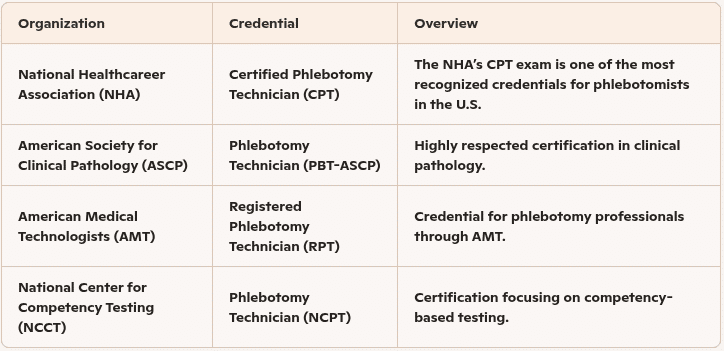
Source: www.pennfoster.edu
Top U.S. cities with the highest pay for phlebotomists
Pay levels for phlebotomists vary widely across the U.S., and location plays a major role in determining earnings. Cities with advanced healthcare infrastructure, higher patient volumes, and workforce shortages tend to offer better compensation.
When you plan to apply for a phlebotomist job, understanding which states and cities offer higher pay and the reasons behind it helps professionals choose locations where their skills are in greater demand and more highly valued. Below are the top five cities, along with salary figures (data procured from BLS and Glassdoor), to provide clearer insight into earning potential across different locations.
#1. San Francisco, California
Phlebotomist salary trends in San Francisco remain among the highest, driven by the city’s high cost of living and dense healthcare network. Large hospitals, research centers, and private labs create a steady demand for skilled professionals.
For those willing to manage higher expenses, the earning potential and exposure to advanced healthcare settings can strongly support a long-term phlebotomist career growth. Facilities in this region also prioritize candidates who can adapt to fast-paced environments and diverse patient populations.
Annual base pay: $45,000 to $56,000
#2. New York City, New York
Phlebotomist job openings in New York City are driven by population size and nonstop patient volume. With countless hospitals and diagnostic centers, demand stays consistent throughout the year.
Because employers compete for trained staff, wages often stay at the upper end of the phlebotomist salary range, especially for professionals with experience. The city’s round-the-clock healthcare operations make reliability and clinical accuracy especially important for employers.
Annual base pay: $42,000 to $54,000
#3. Seattle, Washington
Phlebotomist salary levels in Seattle benefit from a growing healthcare system and strong employer standards. The city’s focus on quality care creates steady opportunities for trained professionals.
Seattle also attracts those interested in stable work environments while building a long-term phlebotomist career with competitive pay.
Employers in Seattle often seek professionals who can maintain consistency while handling steady patient flow.
Annual base pay: $45,000 to $57,000
#4. Boston, Massachusetts
Phlebotomist job demand in Boston is supported by world-class hospitals and teaching institutions. These facilities rely heavily on skilled clinical staff to manage high patient flow.
The presence of major healthcare systems in Boston supports a consistently higher salary range for phlebotomists than in many other regions. In addition to competitive pay, working in Boston offers exposure to research-driven environments that value precision, regulatory compliance, and clinical accuracy.
Annual base pay: $42,000 to $53,000
#5. Anchorage, Alaska
Phlebotomist salary in Anchorage stands out due to workforce shortages and geographic challenges. Fewer professionals are available, which increases pay and benefits.
Many facilities offer strong compensation packages, making this location appealing to professionals who are open to relocation and gaining broader experience in the phlebotomy profession. Those who meet licensing and relocation requirements often find the move financially and professionally rewarding.
Annual base pay: $39,000 to $49,000
How to get a phlebotomist job in these cities
Phlebotomist job access in high-pay cities depends on preparation. Certifications from recognized bodies are often required, and some states have specific licensing rules. Employers also value hands-on experience and strong patient interaction skills.
Before applying, it is important to review employment levels in each city. High pay does not always mean easy hiring. Understanding demand, competition, required skills, and job volume helps you plan better, especially if you are exploring travel phlebotomist jobs.
To apply or work in these cities, having a valid state license along with market-trending skills is essential, as licensing requirements vary by location. Some states require certification plus additional state approval before you can begin working.
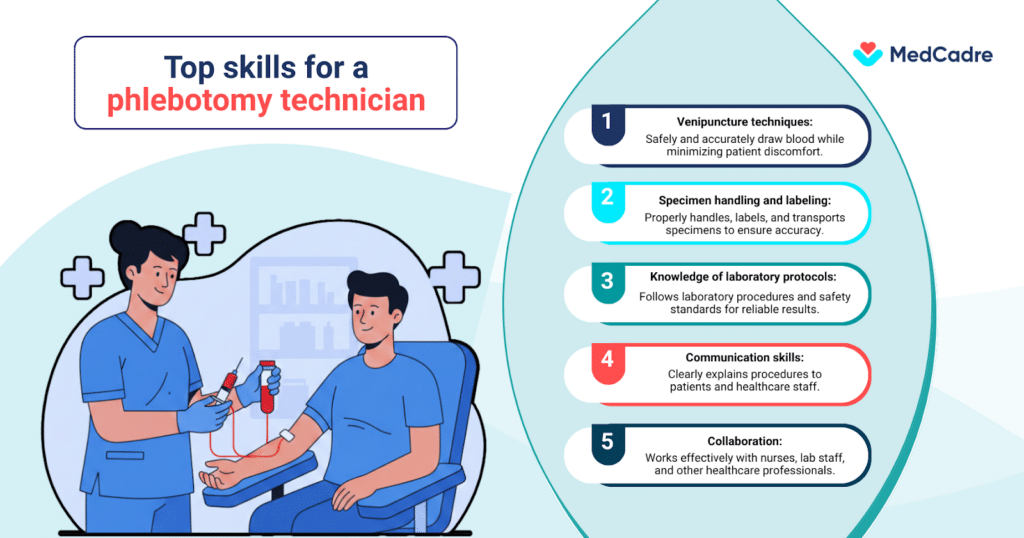
Checking state-specific licensing rules in advance helps avoid delays during the hiring process. To secure a role in these high-paying cities, it is also important to understand the top skills employers look for, which is why a detailed infographic has been added for clearer, practical guidance.
A practical perspective for working professionals to grow
As a working phlebotomist who is considering a job change for professional growth, it is essential to know which city pays well for your role. Along with salary insights, you must also understand certification needs, skill expectations, and employment demand in those cities. Knowing these details makes it easier to move closer to your dream role and grow within the phlebotomy profession.
Many professionals start with free job boards or traditional staffing agencies. Free job portals often have outdated listings, high competition, and slow responses. Traditional agencies may limit pay transparency, offer fewer choices, and take longer to place candidates. These issues can delay your progress and affect your income, especially when searching for travel phlebotomist jobs.
To avoid these delays, when you join a phlebotomist job, choosing the right staffing platform matters. This is where MedCadre stands out for healthcare professionals actively searching for better opportunities.MedCadre’s streamlined application process allows you to manage your job search without disrupting your current work schedule.
The pricing model ensures a large portion of the bill rate goes directly to your pay, giving you clear visibility into your earnings. Its AI-driven portal speeds up credentialing by 30%, helping you start assignments on time. The integrated timesheet system supports timely approvals, so you receive accurate and on-time payments.
For professionals aiming to advance their phlebotomist career, having the right platform can make all the difference between waiting and moving forward with confidence. To stay ahead, regularly check the current openings page for newly posted opportunities. If you do not find the right fit immediately, you can submit your resume to receive updates on roles aligned with your goals, preferred location, and evolving job markets.
FAQs
Why do phlebotomist salaries vary by city in the U.S.?
Pay differences are mainly influenced by healthcare demand, cost of living, and workforce shortages. Cities with larger hospital systems and higher patient volumes usually offer better compensation. Experience and certifications can further increase earning potential in these locations.
Do certifications really impact a phlebotomist’s salary?
Yes, certifications play a major role in pay and job opportunities. Employers prefer certified professionals because they meet recognized skill and safety standards. In high-paying cities, certifications and hands-on experience can significantly improve earning potential.
How much experience do I need to work in high-paying cities?
Many employers prefer candidates with at least one to two years of clinical experience. Experience shows reliability, efficiency, and patient-handling skills. Entry-level professionals can still qualify but may start at lower pay ranges.
Is MedCadre suitable for both full-time and contract phlebotomist jobs?
Yes, MedCadre supports both contract and full-time phlebotomist opportunities. Professionals can explore roles across different cities and states based on their career goals. This flexibility allows users to choose assignments that best fit their lifestyle and income needs.
Why should phlebotomists choose MedCadre over traditional staffing agencies?
MedCadre offers faster placements, better pay visibility, and a more professional-driven experience. Unlike traditional agencies, the platform reduces delays, improves communication, and gives professionals more control over their career choices.