The way people approach healthcare jobs has changed significantly over the last few years. Many professionals now want careers that offer flexibility, steady income, and the freedom to work without being tied to a physical location. This shift has opened the door to remote roles that still allow individuals to stay connected to patient care and the facility’s operations.
If you are a professional exploring new opportunities or thinking about a career shift, flexible roles can help you balance work and personal life while continuing to grow professionally. From clinical to non-clinical positions, remote options are becoming more accessible than ever. The top five roles are outlined below, along with their required certifications and salary ranges (data procured from BLS and Glassdoor).
1. Telehealth nurse
Telehealth nursing has become one of the most in-demand remote healthcare jobs. Nurses in these roles support patients through virtual consultations, symptom assessments, and follow-up care. This role allows registered nurses to use their clinical expertise while working in a more flexible environment.
Telehealth nurses often work regular shifts, making it easier to manage family responsibilities or personal commitments without stepping away from patient care.
- Certifications: Ambulatory Care Nursing (RN-BC) or Telehealth Nursing Certification (TNC) by the American Nurses Credentialing Center (ANCC)
- Average base pay per year: $69,000 – $95,000.
2. Medical coder
Medical coding is a popular option for professionals seeking structured remote medical jobs. Coders review clinical documentation and convert it into standardized codes used for billing and compliance.
Accuracy and attention to detail are critical, making this role ideal for individuals who prefer focused, independent work. Certification and a strong understanding of medical coding systems are typically required, and demand remains steady across hospitals, clinics, and billing organizations.
- Certifications: Certified Professional Coder for physician offices by the American Academy of Professional Coders (AAPC)
- Average base pay per year: $42,000 – $63,000.
3. Medical transcriptionist
Medical transcriptionists play a key role in supporting documentation. They listen to physician recordings and convert them into written medical records. This position suits individuals with strong listening skills and medical terminology knowledge who want flexibility without direct patient interaction.
Many transcription roles allow professionals to work on their own schedules, making them a practical option within the broader landscape of healthcare jobs.
- Certifications: Registered Healthcare Documentation Specialist (RHDS) by the Association for Healthcare Documentation Integrity
- Average base pay per year: $43,000 – $67,000.
4. Registered nurse (Remote Roles)
Registered nurses are no longer limited to bedside roles. Many now work remotely in care coordination, utilization review, case management, and patient education. These roles allow nurses to apply their clinical experience while stepping away from physically demanding environments. Remote RN positions are becoming increasingly common across facilities that aim to enhance care quality through virtual support systems.
- Certifications: BLS (Basic Life Support) by the American Heart Association (AHA) and the American Red Cross.
- Average base pay per year: $76,000 – $1L.
5. Pharmacist (Remote Roles)
Pharmacists also have growing opportunities in virtual settings. Remote pharmacist roles focus on medication therapy management, patient counseling, and prescription reviews. These positions are well-suited for professionals who want flexibility while maintaining a high level of clinical responsibility.
As digital health services expand, pharmacists continue to find meaningful work within remote healthcare jobs that support patient safety and treatment outcomes.
- Certifications: Doctor of Pharmacy (PharmD) degree.
- North American Pharmacist Licensure Examination (NAPLEX) by NABP (National Association of Boards of Pharmacy).
- Average base pay per year: $1L – $2L.
Why choose flexible remote healthcare jobs
Flexible remote roles are changing how professionals plan their long-term careers within medical jobs. Rather than being limited by geography or facility availability, remote opportunities allow individuals to focus on roles that match their skills, experience level, and career goals. This shift supports steady professional growth without requiring frequent job changes or relocations.
Another key advantage of remote healthcare work is broader career access. Professionals can explore specialized roles and emerging virtual care models that may not be available locally. This expanded access helps professionals stay competitive and relevant as requirements delivery continues to evolve.
Remote healthcare roles offer flexibility and new career opportunities, but they also come with practical considerations. Understanding both the benefits and the challenges can help professionals decide whether remote work aligns with their skills, work style, and long-term career goals.
Advantages
- Flexible work structure – Many roles allow professionals to work from home and, in some cases, choose schedules that better fit personal responsibilities.
- Elimination of daily commuting – Reduces transportation costs and saves time that can be redirected toward work or personal priorities.
- Access to a wider job market – Enables professionals to apply for roles across multiple regions without the need to relocate.
- Improved work-life balance – Particularly beneficial for parents, caregivers, and individuals seeking a more manageable work routine.
Challenges
- Reduced in-person patient interaction – May feel limiting for professionals who prefer face-to-face clinical engagement.
- Technology and compliance requirements – Reliable equipment, secure internet access, and HIPAA-compliant systems are essential.
- Higher self-management expectations – Remote roles require strong time management, focus, and accountability.
- Licensing and regulatory limitations – Some pharmacist positions require additional state approvals or licensure before practicing remotely.
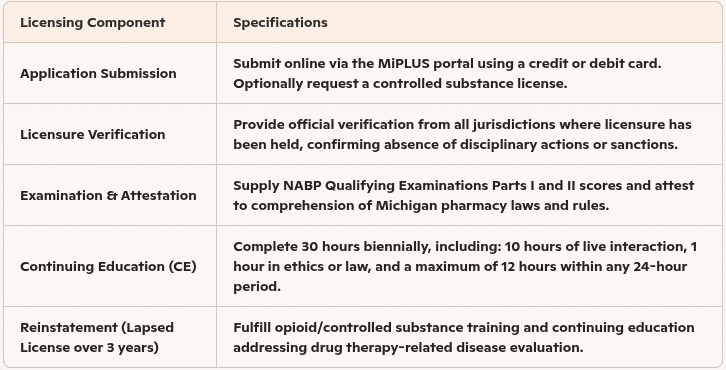
For example, if you are applying for a pharmacist role in Michigan, you must meet specific state licensing requirements, and a detailed infographic has been provided to clearly explain the licensing process and make it easier to navigate.
Essential steps for Michigan pharmacist licensing
How to choose the right remote healthcare role?
Choosing the right role depends on your background, career goals, and lifestyle preferences. Some professionals are drawn to patient-facing positions, while others prefer documentation, coordination, or support-focused work. Taking time to evaluate your strengths and work style can help you identify remote medical jobs that truly fit your needs.
Step 1: Assess your fit
Before exploring opportunities, it is important to understand whether remote work aligns with how you operate professionally. Remote healthcare roles require independence, accountability, and comfort with digital systems.
Ask yourself:
- Do I enjoy working independently without constant supervision?
- Am I comfortable using technology and virtual communication tools?
- Can I stay productive and organized in a remote setting?
Step 2: Gain relevant skills and certifications
Having the right skills improves access to remote roles and long-term growth. Clinical professionals, including registered nurses, often benefit from telehealth-focused training that supports virtual care delivery and patient communication.
Building experience with platforms such as Epic or Cerner, along with virtual communication tools like Zoom, Doximity, or Microsoft Teams, helps strengthen eligibility for remote roles across healthcare jobs.
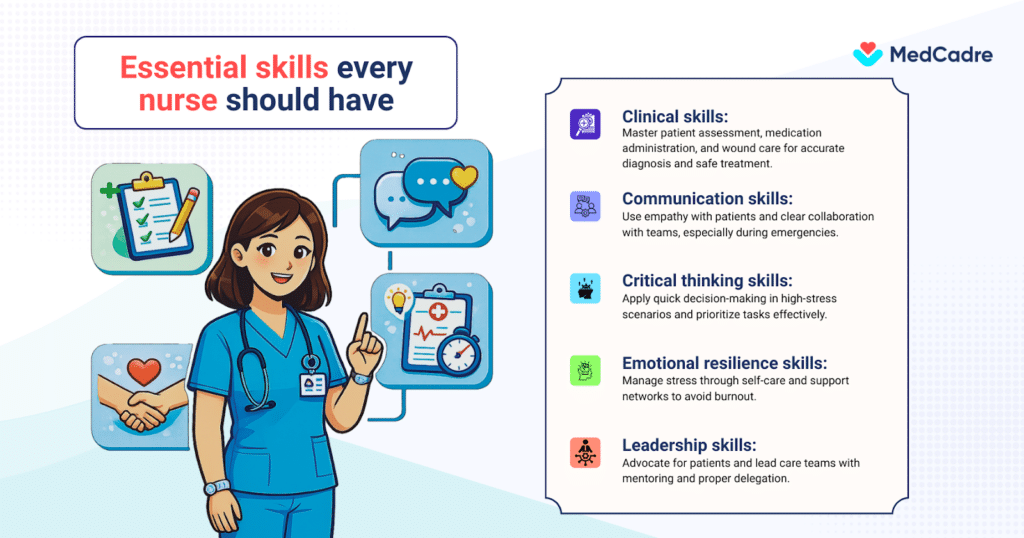
If you are applying for registered nurse roles, it is also important to understand the list of vital skills employers expect, which is why a detailed infographic has been added below for better understanding.
Step 3: Update your resume and online presence
Your resume and usage of online presence should clearly reflect your readiness for remote work. Highlight experience with telehealth, digital charting, virtual collaboration, and independent task management. Including relevant keywords such as remote, telemedicine, and virtual care helps your profile stand out to employers offering remote medical jobs.
Also read: How to build a professional online presence as a healthcare worker
Using a smart platform to get flexible remote healthcare careers
For professionals exploring flexible remote opportunities, it is essential to confirm that you meet the required skill, certification, and licensing standards and that the role aligns with your work style and career goals. This clarity helps you focus on positions that truly support long-term growth within today’s healthcare jobs landscape.
Choosing the right job search platform is equally important. Free job portals often contain outdated listings and heavy competition, while traditional staffing agencies may limit role visibility and offer little pay transparency. These challenges can delay progress when pursuing remote healthcare jobs.
Partnering with a modern staffing platform like MedCadre helps simplify the transition. MedCadre supports professionals in overcoming job gaps and balancing current work while job hunting. Its streamlined application process reduces disruption, the fair pricing model provides clear earning visibility, and AI-driven credentialing speeds up onboarding by 30%. An integrated timesheet system also ensures accurate and on-time payments.
To take the next step, explore the current openings page to find roles aligned with your skills and interests across remote medical jobs. If you do not see the right match, submit your resume so the MedCadre team can connect you with suitable opportunities as they become available, helping you stay in control of your career path within an evolving market.
FAQs
Who can apply for flexible remote healthcare roles?
Both clinical and non-clinical professionals are eligible to apply, depending on their education, experience, and licensing requirements. Common roles include nurses, pharmacists, coders, and administrative support specialists.
Do remote healthcare jobs require certifications or licenses?
Many remote roles still require active certifications or state licenses, especially for clinical positions. Requirements vary by role and location, so it is important to review them before applying.
Can remote healthcare jobs pay as well as on-site roles?
In many cases, remote roles offer competitive pay, particularly for experienced professionals. Reduced commuting and relocation costs can also improve overall earnings.
How does MedCadre make the job search easier for healthcare professionals?
MedCadre simplifies the job search by offering a streamlined application process that allows professionals to explore and apply for roles without disrupting their current work schedule. This helps reduce stress and keeps the search organized and efficient
How does MedCadre support timely and accurate payments?
MedCadre includes an integrated timesheet system that enables timely approvals and reduces payment errors. This ensures professionals receive accurate and on-time payments throughout their assignments.