Many professionals today seek meaningful careers that combine patient interaction with long-term stability. With growing demand across hospitals, clinics, and outpatient settings, allied health jobs have become an appealing option for those who want to work in healthcare without following traditional physician or nursing tracks.
This blog helps you determine whether this career path aligns with your interests, skills, and lifestyle preferences. As healthcare services expand nationwide, support roles are becoming more critical than ever. This shift has opened the door to a wide range of healthcare jobs that offer faster entry into the field and diverse work environments.
Why do people choose allied healthcare careers?
One reason many people pursue this path is the shorter education timeline compared to traditional medical careers. Many programs emphasize practical, hands-on training, allowing individuals to enter the workforce sooner and build skills on the job. This makes allied health jobs especially appealing for career changers and recent graduates.
Another major advantage of allied healthcare roles is the combination of strong earning potential, steady demand, and long-term stability. Many professionals choose this path because the salaries are competitive relative to the time spent in education, offering a quicker return on investment compared to many traditional healthcare careers.
For example, if you are looking to apply for an occupational therapist role, salary is often a key motivator, as these roles typically provide consistent income growth, benefits, and financial security across healthcare settings.
This dependable compensation, along with steady demand, makes today’s healthcare jobs market especially attractive for allied professionals. A detailed infographic is added below to highlight salary ranges, growth potential, and role-specific demand for a better understanding.
Annual mean wage of occupational therapists in the USA

Source: www.bls.gov
Key questions to ask yourself before choosing this path
Before committing to this career path, it is essential to consider how well your interests and work preferences align with the roles in allied healthcare. Some positions involve direct patient care, while others focus on technical, administrative, or support functions. Understanding where you feel most comfortable helps narrow your options and avoid role mismatch.
- Do you prefer hands-on patient interaction or behind-the-scenes support work?
- Are you comfortable working in structured or fast-paced clinical environments?
- Do you enjoy developing specialized skills rather than practicing general medicine?
Top allied healthcare roles to explore
Allied healthcare offers a wide range of career paths, allowing individuals like you to choose roles that align with your skills, interests, and long-term goals. Some of the most in-demand allied health jobs are outlined below, along with key certification considerations to keep in mind while applying.
- MRI Technician: Imaging technologists perform diagnostic scans that help physicians identify injuries and medical conditions.
Required certification: Accredited imaging program completion and national certification, such as ARRT, depending on specialization and state requirements.
- Physical Therapists: Help patients regain mobility, strength, and function after injury or illness
Required certification: State licensure following completion of an accredited physical therapy or assistant program.
- Medical Assistants: Support daily clinical operations by handling both administrative and patient-care tasks.
Required certification: Certification, such as CMA or RMA, is commonly preferred, especially when applying to clinical settings.
- Surgical Technologists: Assist surgeons during procedures by preparing operating rooms and maintaining sterile fields.
Required certification: Accredited surgical technology program and CST or equivalent certification.
- Physician Assistants: Examine patients, diagnose conditions, and provide treatment under physician supervision.
Required certification: Master’s degree from an accredited PA program and national certification through PANCE, along with state licensure.
Also read: The advantages of a career in allied health professions
How to choose the right allied healthcare role?
When evaluating your options, focus on roles that offer both skill development and competitive compensation over time. Positions with clear advancement paths and certification opportunities often provide stronger long-term value within allied health jobs.
It is also essential to review job descriptions carefully to understand daily responsibilities, physical demands, and growth potential. Knowing job descriptions in detail is crucial before joining any role, as it helps professionals set clear expectations and make informed career decisions.
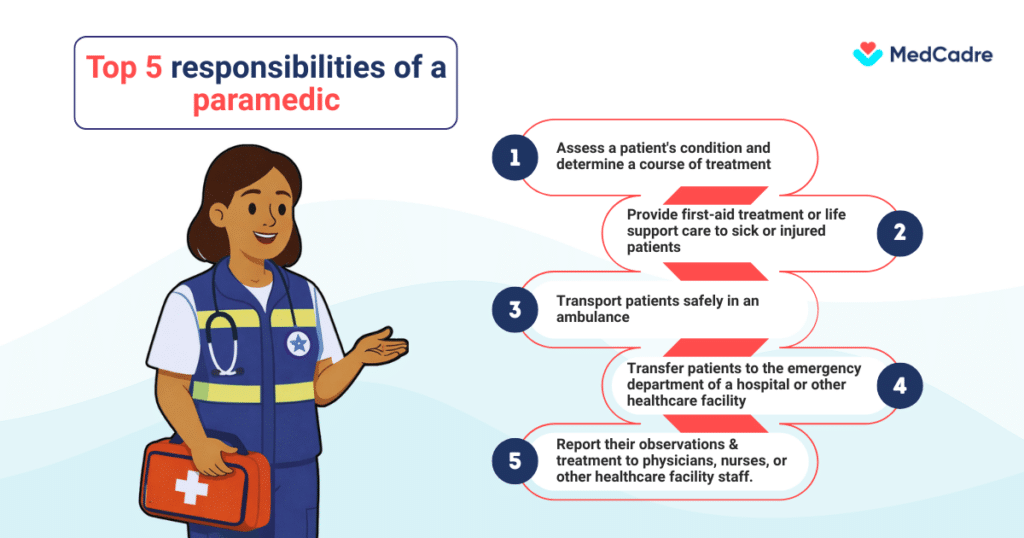
For example, if you are a professional looking to apply for a paramedic job, understanding the responsibilities involved is essential to assess readiness for the role. If relocation is part of your plan.
You must also confirm state licensing requirements early, as these can impact eligibility for many healthcare jobs. A detailed infographic is added to help professionals like you clearly understand the responsibilities and role expectations of paramedics.
Leverage modern platforms to track healthcare opportunities
Deciding whether allied healthcare is the right career path for you is an important first step, but it is only part of the journey. To succeed in this field, professionals must also choose the right way to access opportunities, manage credentials, and secure roles that align with long-term goals.
Traditional agencies often create challenges such as high placement fees that reduce take-home pay, limited transparency around roles and compensation, and slow processes that delay onboarding. Similarly, free job portals may appear convenient but frequently lack role verification, personalized support, and visibility into credentialing or compliance requirements. These limitations can create hurdles that slow down career progress and make it harder to access reliable allied health jobs.
To overcome these challenges, partnering with a modern staffing platform such as MedCadre offers a more efficient and professional approach. Built for today’s healthcare workforce, MedCadre removes common barriers and comes with many benefits. They are as follows:
Key benefits of partnering with MedCadre include:
- Streamlined application process: MedCadre’s simplified application workflow allows you to manage your job search effortlessly while ensuring your current responsibilities remain uninterrupted.
- Transparent and fair compensation: The pricing model ensures that a significant portion of the bill rate is allocated directly to your pay, giving you a clear and equitable understanding of your earnings.
- Faster credentialing timelines: MedCadre’s AI-driven portal accelerates the credentialing process by 30 percent, helping you begin new assignments on time without unnecessary delays.
- Accurate and timely payments: The integrated timesheet system supports quick approvals, ensuring payments are processed accurately and delivered on schedule.
To stay informed about new opportunities, regularly review the current openings page for recently posted roles. If you do not find the right match right away, you can submit your resume, which allows you to receive timely updates on positions aligned with your career goals, preferred location, and evolving medical assistant job requirements.
This proactive approach ensures you remain visible to recruiters as new roles become available. It also helps reduce delays in placement by keeping your profile ready for immediate consideration when suitable opportunities arise.
FAQs
Are allied healthcare jobs in demand?
Yes. The demand for allied health professionals continues to grow due to an aging population, rising chronic conditions, and the expansion of healthcare services. This demand creates stable opportunities across hospitals, clinics, schools, and outpatient facilities.
Can I advance my career in allied healthcare?
Absolutely. Many allied health roles offer opportunities for skill development, specialization, and leadership positions. You can also transition into advanced clinical roles or pursue management responsibilities over time.
Can I work as a contract or full-time employee in allied health?
Some roles offer full-time or contract professionals. Flexibility varies by employer and role, so it is important to discuss schedules during the staffing process.
Is MedCadre suitable for professionals new to allied healthcare?
Absolutely. Whether you are just starting your career or looking to transition into a new specialty, MedCadre provides guidance, access to verified opportunities, and support for understanding job requirements, licensing, and compliance standards.
Can I find full-time and contract roles through MedCadre?
Yes. MedCadre offers both full-time and contract opportunities across various allied healthcare specialties, giving you flexibility to choose roles that fit your schedule, lifestyle, and professional development goals.