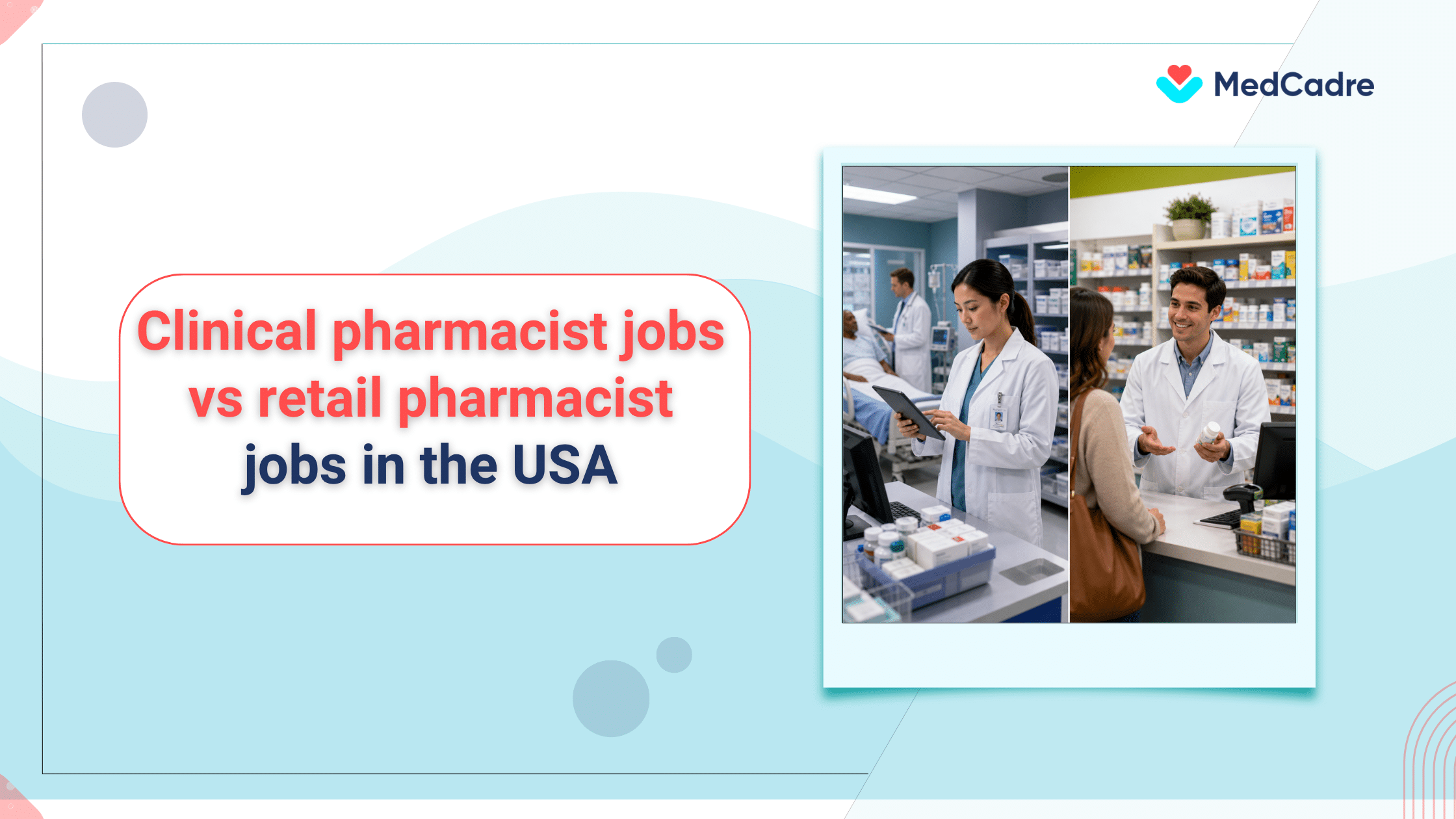
Healthcare professionals who are exploring jobs in the pharmacy sector, including retail pharmacist jobs, must understand the key differences between clinical pharmacist vs retail pharmacist roles.
This understanding helps professionals like you to choose the right pharmacy role. This blog explains the difference between the two pharmacy roles in the USA and helps you choose the right one.
Understanding retail and clinical pharmacist roles: Key roles explained
Choosing between clinical and retail career roles will depend on your personal interests and professional preferences.
If you are a recent graduate and planning to apply for retail pharmacist jobs, you must know that these roles mainly focus on dispensing medications, guiding patients on prescriptions, and supporting daily pharmacy operations. On the other hand, you can apply for Clinical pharmacy jobs if you can work more closely with healthcare teams to review medications and monitor treatment outcomes.
Key responsibilities in retail pharmacist settings
Healthcare professionals who are planning for a transition from clinical practice into retail pharmacist jobs will notice a shift towards more community-facing responsibilities with a faster daily workflow.
Your clinical knowledge will be an added advantage in managing prescription accuracy, handling patient queries, and ensuring safe medication use in a high-volume setting. The following are the responsibilities of retail pharmacists.
- In the retail role, you apply your clinical expertise to verify prescriptions and resolve medication-related concerns quickly
- You support community health needs by guiding patients on safe medication use, vaccinations, and over-the-counter treatments
Key responsibilities in clinical pharmacist settings
As a healthcare professional planning to apply for clinical pharmacist jobs, understand that your role is increasingly integrated with doctors in patient care settings.
You will actively use your clinical expertise to evaluate medication plans and track patients’ responses to treatment over time. This pharmacy role often requires critical thinking and quick decision-making in fast-paced hospital environments.
- You review treatment plans, monitor patient progress, and help improve therapy outcomes in clinical settings
- You collaborate with physicians and healthcare teams during patient care discussions and hospital rounds
How to choose between clinical and retail pharmacist careers
Choosing a pharmacy role completely depends on your personal interests and goals. As a job seeker, you must also consider multiple factors. Those can include, for example, preferred work environment, long-term professional goals, retail pharmacists’ salary expectations, and job responsibilities, especially if you are targeting retail roles.
Before making a decision, you must decide whether you enjoy direct patient interaction in a community setting or working closely with doctors on a facility’s team. You should also evaluate factors such as work-life balance and growth opportunities, and assess whether your skills fit the role you plan to apply for. The following are a few vital factors to consider when choosing the right role.
Check the education requirements
Before choosing your desired role, whether it is a retail or clinical pharmacist position, you must check the educational requirements listed in the job description. You must understand that clinical pharmacist positions often require additional training, such as residencies or specialized certifications, along with a Pharm.D certification.
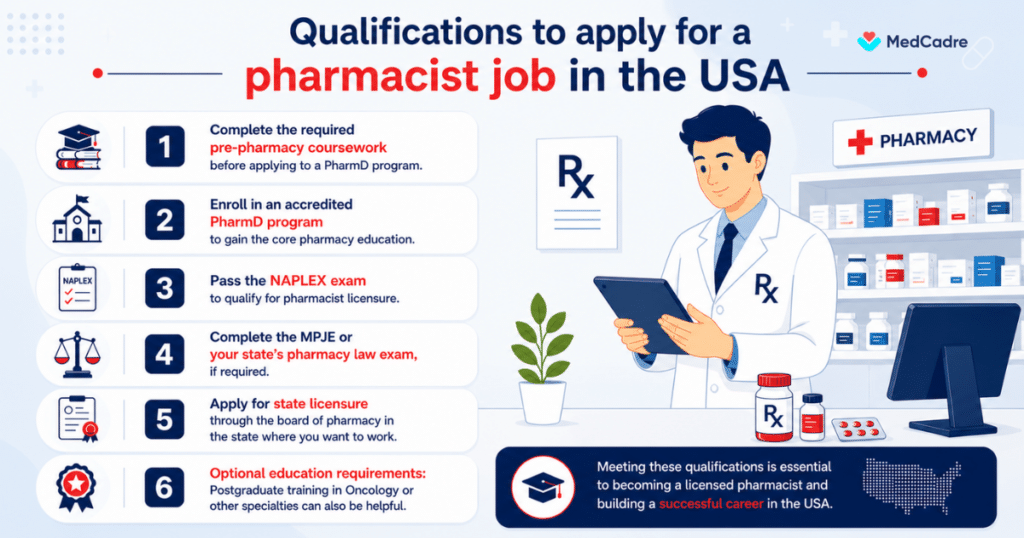
Similarly, retail roles mostly require licensing and standard pharmacy qualifications without extended clinical training. For example, if you are ready to pursue further study and specialization, clinical pharmacy is a good option. If you want to start working sooner with basic qualifications, a career in pharmacy may be more suitable. A detailed infographic outlining the educational qualifications required for each role is provided below for clarity.
List of required qualifications to apply for a pharmacist job in the USA
Consider work environment preference
The work environment plays a major role when choosing between clinical and retail pharmacy careers. Clinical pharmacists typically work in hospitals and other healthcare facilities, collaborating with doctors, nurses, and other medical teams in structured clinical settings.
Retail pharmacists work in community pharmacies where they directly interact with patients and handle day-to-day prescription needs. Understanding where you will spend most of your working hours helps you choose a setting that matches your comfort and working style.
Salary expectations and growth opportunities
As a working professional, you should compare salaries and growth opportunities between clinical and retail pharmacy roles, especially since these are among the fastest-growing healthcare jobs in the country. Clinical pharmacists may have higher earning potential in specialized hospital settings, while retail pharmacists often have stable income with performance-based growth.
Understanding the differences between clinical pharmacist salaries and retail salaries helps you align your financial goals with the right career choice. For example, in California, according to the BLS, pharmacists earn about $150,000–$170,000 per year, with clinical roles on the higher end and retail roles offering stable mid-range salaries. A detailed infographic has been added for better understanding.
Annual mean wage of pharmacists in the USA by state.
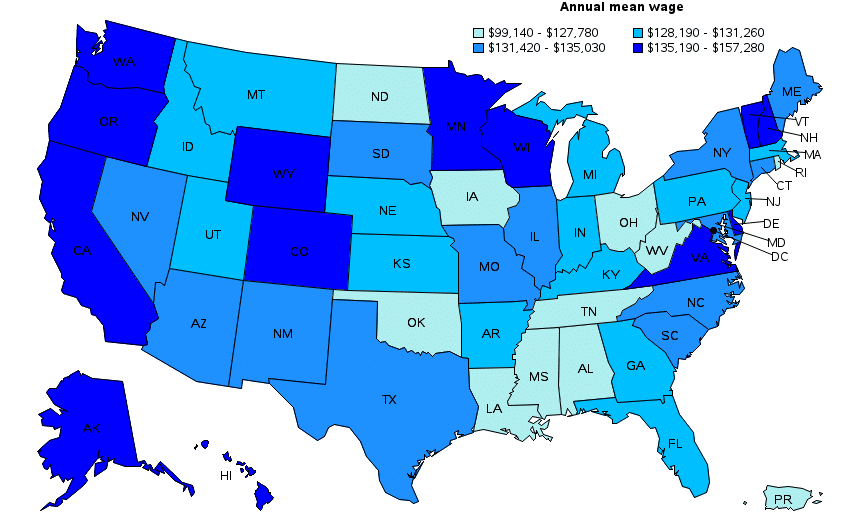
Source: BLS
Long-term career goals and specialization interests
Your long-term goals for professional and personal growth play an important role in deciding between clinical and retail pharmacy careers. If you are looking for patient-focused clinical work and specialization, clinical roles may be a better fit.
If you prefer steady growth in community healthcare and customer interaction, a career in retail pharmacy can be a strong path.
How choosing the right platform helps your job search pharmacists
Pharmacy professionals like you must know about the roles you want to work in because understanding the differences between retail and clinical roles will help you focus on where you can apply. If you are considering options such as retail pharmacist jobs or clinical roles, you should know that relying on traditional agencies may slow your progress.
It is because many of these platforms mostly operate manually and lack communication, proper onboarding support, and transparency during the recruiting process. In the same way, choosing a free job portal can also bring challenges, as it may have unverified jobs and lack transparency. To avoid challenges, you must opt for a modern staffing platform that makes your job search more efficient and easier. Pharmacy staffing platforms like MedCadre are a better option because they use AI technology to create a flexible, easy-to-use platform. This platform comes with multiple benefits, such as:
- Follows a transparent pricing model, allowing you to receive a significant portion of your billable costs
- Offers 30% faster credentialing than traditional agencies, helping you start your role sooner.
- This pharmacy staffing platform offers 30% faster credentialing than traditional agencies, helping you start your role sooner.
If you are a healthcare working professional who is looking for better-paid pharmacist jobs, you can regularly review the current openings page to explore retail pharmacist jobs or other healthcare roles that align with your experience. If you do not find an immediate role match, you can submit your resume, which allows you to receive updates on upcoming pharmacist roles.
FAQs
Can I switch from a retail pharmacist job to a clinical role later?
Yes, but it may require additional training. If you start in retail and later want to move into clinical pharmacy, you might need to complete a residency or gain relevant clinical experience to qualify for hospital-based roles
Do retail pharmacists need additional training?
Retail pharmacists usually need a pharmacy degree and a valid license to practice. Unlike clinical roles, they typically do not require extended residencies or specialized clinical certifications. But training can be beneficial for earning a good salary as a retail pharmacist.
How does a clinical pharmacist’s salary compare to other roles?
The salary can be higher in specialized hospital settings, especially if you have advanced training or certifications. It often reflects the level of responsibility and expertise required
Can I search for clinical pharmacist jobs near me through MedCadre?
Yes, MedCadre connects you with opportunities based on your preferred location, role type, and experience. If you are looking for clinical pharmacist jobs, MedCadre helps match you with relevant openings across hospitals and healthcare facilities in the U.S.
What types of pharmacist roles are available on MedCadre?
MedCadre offers a variety of roles, including contract and full-time positions. As part of its allied healthcare staffing services, it places pharmacists in hospitals, clinics, and other healthcare settings based on demand and your qualifications.