

The healthcare sector has been growing rapidly in recent years, and as a graduate, if you are looking for a rewarding career, comparing a Phlebotomist vs. a medical lab tech is a better option, as these patient care jobs are also in high demand.
As a job seeker, you must understand that both roles directly interact with patients but slightly differ in their daily responsibilities, education requirements, skills, salary, and career opportunities.
So, if you are planning to apply for phlebotomy jobs or are considering MLT jobs, it is your primary duty to understand the differences between these roles before choosing a career path.
This blog explains both careers, including what each role entails and the qualifications required. This explanation will provide a clearer understanding of which career best matches your interests and long-term professional goals.
Understanding the difference between a phlebotomist and a medical lab technician
As discussed before, before you choose a role, it is mandatory to understand the difference between these roles by comparing phlebotomist vs. medical lab tech.
Both healthcare professionals deal with lab tests and assist in patient care. Still, their roles and duties are different.
Researching and knowing what each role involves can help you choose a professional career that matches your interests and long-term goals.
What does a phlebotomist do?
A phlebotomist is a healthcare professional who specializes in collecting blood samples from patients for medical testing, blood donations, or transfusions.
You can apply for phlebotomist jobs if you like working with patients, helping them feel comfortable, and performing hands-on clinical tasks. These jobs can be a great fit for your life if you are interested in testing blood samples from patients for treatment.
What does a medical lab technician do?
On the other hand, if you are planning to apply for a medical lab technician job at a facility, understand that you will need to perform laboratory tests on blood, urine, and other patient specimens to help physicians diagnose and treat patients.
Medical lab technician jobs will be a great fit for your career if you prefer working in the laboratory with testing equipment and analyzing samples rather than directly interacting with patients.
Education requirements for phlebotomists vs medical laboratory technicians
Phlebotomists typically complete a short training program that focuses on blood collection techniques, patient safety, and specimen handling, allowing many professionals to enter the workforce relatively quickly.
Medical lab technicians usually complete a two-year associate degree that provides broader laboratory training in subjects such as microbiology, hematology, and clinical chemistry.
Essential skills for phlebotomists and medical laboratory technicians
As of now, you might have received detailed information about both roles, including educational requirements, but it is essential to compare the core requirements, such as certifications, skills, and compensation, for each role.
The comparison below gives you a clear overview of what each role requires before you start applying for jobs.
Understanding these differences can help you prepare for the right career path and set realistic expectations about your future salary.
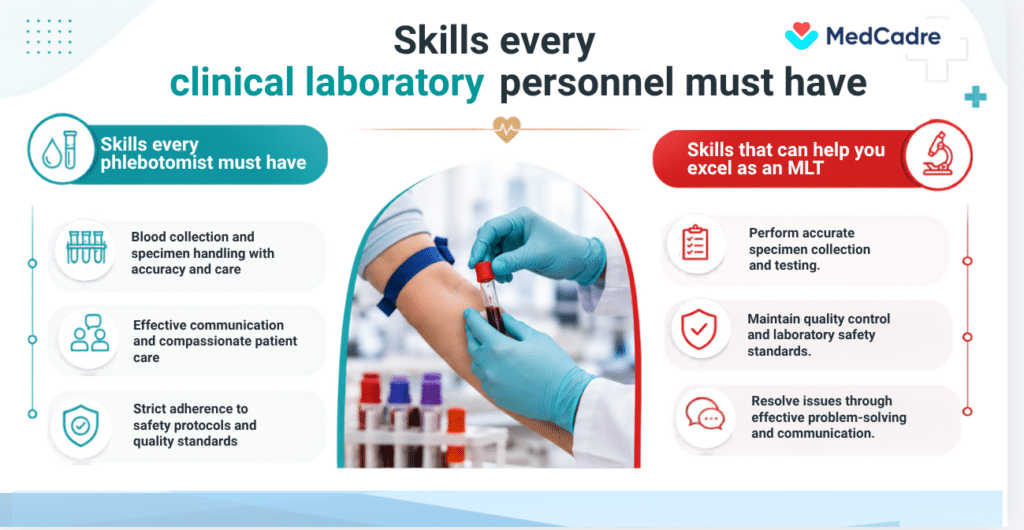
For example, if you are planning to apply for a phlebotomist job in New York, you must understand that most employers may look for phlebotomist skills such as accurate blood collection, patient communication, specimen handling, and attention to safety protocols. A detailed infographic highlighting essential skills for both roles to make your job search easier.
Essential skills every clinical laboratory professional must have
Certification requirements for both careers
If you are planning to apply for a medical lab tech job, you must understand that having certifications can make you stand out professionally during the recruiting process.
Many employers who are planning to hire skilled professionals prefer phlebotomists to have a nationally recognized certification.
Having certifications will not improve employment opportunities, but will help you to enhance the way you treat patients.
If you have chosen to work as a medical lab technician in a clinic, you must have professional certification, which validates your laboratory knowledge. Along with the certifications, you may also need state regulations or licenses.
Salary comparison between phlebotomists and medical lab technicians
Having competitive pay is essential to lead a professional life with no hurdles. So, when you are comparing phlebotomist vs medical lab tech jobs, cross-check and decide which role fits you and which has a competitive salary.
Professionals who want to work in labs can get a comprehensive medical lab technician salary if they choose states that have a high number of hospitals and clinics, such as Oregon.
Employees in this role generally earn higher salaries than phlebotomists because they complete more advanced education and perform a wider range of laboratory testing.
For example, if you are planning to apply for a medical laboratory technologist job in Oregon, then you can earn an average annual salary of $76,830, with an average hourly wage of $36.94/hr.
In the same way, you can earn an attractive phlebotomist salary because the role you choose combines technical expertise in blood collection with direct patient care. These skills make it an essential part of the diagnostic process in healthcare.
Before applying, you must remember that both careers offer competitive pay based on your skills and certifications, and it may vary from place to place.
A table format of information related to phlebotomists and medical lab technicians is added to provide detailed information about salaries. It helps you to stay up to date and will allow you to negotiate compensation during the signing of a job offer.
Compare MLT and Phlebotomist salaries by state
Name of the role | State | Hourly Wage | Annual wage |
Medical Laboratory Technologist | New York | $39.39/hr | $81,930 |
Oregon | $36.94/hr | $76,830 | |
Connecticut | $36.63/hr | $76,190 | |
Vermont | $36.38/hr | $75,660 | |
New Hampshire | $36.02/hr | $74,920 | |
Phlebotomist | California | $25.18/hr | $52,370 |
Washington | $24.42/hr | $50,800 | |
New York | $24.09/hr | $50,110 | |
Maryland | $23.55/hr | $48,970 | |
Delaware | $23.38/hr | $48,630 |
Source:BLS
Choose a trusted platform for your next healthcare role
Before making a final decision related to what role, it is important to understand which role best matches your interests and career goals.
Once you have made your choice, it is essential to research the healthcare staffing platform, which can make your job search faster and more efficient.
During your research, you must understand that relying on traditional staffing agencies can slow your hiring process because of manual workflows. This process may lead to delayed credential verification and limited visibility into available roles.
To avoid these challenges, consider using a modern healthcare staffing platform like MedCadre. Its AI-enabled platform connects you with verified hospital managers. It also matches you with opportunities that align with your qualifications, experience, and preferred work locations.
Choosing MedCadre can be a better option because it comes with advantages, such as:
- Benefit from transparent pay practices with clear compensation details.
- Timesheets are submitted on time through a streamlined process.
- Manage your assignments easily from a single platform.
- You can complete credentialing up to 30% faster.
As a job seeker, you can regularly check the current openings page for newly posted positions. If you do not find the right role immediately, you can submit your resume to receive updates about future opportunities that match your skills, experience, and career goals.
FAQs
How do I decide between a phlebotomist and a medical laboratory technician career?
You need to consider your preferred work environment and daily responsibilities. If you prefer working with patients and drawing blood, phlebotomy could be a great fit. If you like analyzing specimens and using lab equipment, think about being a medical laboratory technician. It could be a perfect match for you.
What factors should I consider before applying for either role?
Consider reviewing the education requirements, certifications, and daily responsibilities. Also, look at the work environment, salary expectations, and long-term career opportunities. These aspects will guide you to the role that best suits your professional goals.
Which career typically offers higher salaries?
Medical laboratory technicians tend to earn higher salaries. They take on more complex tests and have a wider range of technical skills. However, earnings for both careers vary based on experience, certifications, employer, and location.
How does MedCadre help me start my assignment faster?
MedCadre’s AI-driven credentialing process can cut credentialing time by as much as 30%. This helps qualified healthcare professionals complete onboarding sooner and begin assignments on schedule.
Can I find phlebotomist jobs near me through MedCadre?
Yes. MedCadre has job opportunities all over the U.S. You can search openings by job title, city, or state. Whether you are looking for contract or travel positions. The platform helps match your qualifications and location preferences with relevant opportunities.