Healthcare professionals who are seeking better pharmacist jobs must understand that the present industry is evolving rapidly, and pharmacy roles now require more than just technical knowledge and academic qualifications to be recruited.
Clinical recruiters in recent times are looking for pharmacy professionals with strong clinical expertise, communication skills, and adaptability to work at their hospitals.
This blog explains the market-trending pharmacist skills that can help you stand out in the competitive job market.
Why skills matter in the pharmacist job market
Job seekers must understand that pharmacists’ responsibilities are expanding beyond medication dispensing, making professional skill development more important than ever. In recent days, recruiters are increasingly seeking professionals who can support patient-centered care, contribute to clinical decision-making, and work closely with physicians.
Strong technical and communication skills also help reduce medication errors and improve patient safety in hospitals, retail pharmacies, and clinical settings. Having these skills contributes to your career and long-term career growth.
The following points highlight how professional skills support career success in the pharmacist job market:
- Developing patient-focused communication skills helps improve medication adherence.
- Strong collaboration skills support better coordination with healthcare teams.
Building skills will help you secure a better job, and while searching, it is important to know the areas with the highest demand. A detailed infographic has been added for a clearer understanding of job opportunities in the USA.
States with the highest concentration of pharmacist jobs in the USA
State | Employment | Employment per thousand jobs |
West Virginia | 2,530 | 3.67 |
Kentucky | 5,480 | 2.79 |
Washington | 9,450 | 2.70 |
Missouri | 7,720 | 2.68 |
Ohio | 14,620 | 2.67 |
Source: BLS
Top core clinical and technical skills
Pharmacists play a crucial role in providing effective medication to patients, which is why strong clinical and technical skills are essential in daily practice.
Having these pharmacist skills not only supports you in providing accurate dispensing and clinical decision-making but also directly contributes to better patient outcomes. Understanding and applying these core abilities helps you deliver safer, more reliable, and patient-focused care.
Skill #1: Medication dispensing and management
Pharmacist job seekers must have knowledge of medication dispensing and management, as it focuses on ensuring medications are prepared and dispensed accurately and safely. This skill also includes precise dosage calculations and following strict dispensing safety standards to prevent medication errors and protect patient health.
Skill #2: Essential clinical knowledge for pharmacists
Professionals working in the pharmacy sector must be in a position of understanding how medicines work in the human body. It is essential for your pharmacist career to support effective treatment outcomes.
Having this skill helps you identify drug interactions and potential side effects, and apply evidence-based treatment plans. It ultimately helps ensure safer medication use and better patient care decisions.
Skill #3: Patient counseling and education
If you are planning to apply for a pharmacist job in the USA, you must be familiar with patient counseling. Gaining knowledge about these skills will help you ensure that patients clearly understand how to use their medications correctly.
It also involves explaining dosage instructions, potential side effects, and the purpose of each medication in a simple way that your patients can follow.
For example, if a patient is prescribed blood pressure medication, as an experienced pharmacist, you may need to explain when to take it, what side effects to watch for, and why consistent use is important.
Essential soft skills for pharmacists
Healthcare professionals planning to apply for well-paid pharmacist roles should know that, in today’s environment, technical knowledge alone is not enough to succeed. You also need strong soft skills to communicate effectively, understand patient needs, and coordinate with healthcare teams. The following skills play a major role in improving patient experience.
Skill #4: Improving patient care through communication
One major requirement for pharmacists is the ability to communicate effectively with patients and their team, which is key to a successful pharmacy career. Detailed medication instructions and smooth coordination with doctors and nurses ensure that everyone is on the same page.
One of the most beneficial aspects of this skill is that patients benefit when they understand their treatment plan, which builds trust and confidence.
Skill #5: Attention to detail and patient care
Professionals with a sharp eye for detail are crucial in pharmacy roles, as even small mistakes can compromise patient safety. Pharmacists must carefully review physicians’ prescriptions, checking dosages and verifying medication information to ensure accuracy and compliance. Your attention helps prevent medication errors and keeps patients safe.
For example, if you are working in clinical pharmacy, double-checking a prescription before dispensing can catch potential dosage mistakes and avoid harmful outcomes.
Skill #6: Problem-solving and analytical skills
In pharmacy practice, you often need to think critically to ensure patients receive the right treatment. Reviewing patient medication history helps you identify potential drug-related issues and make informed decisions. Your ability to analyze situations carefully supports safer treatment choices and better patient outcomes.
For example, when you notice a possible drug interaction in a patient’s prescription, you can step in early to adjust the treatment plan and prevent complications.
Technological and future skills for pharmacists
Professionals in the pharmacy sector must always keep up with modern technology, as it is becoming increasingly important in their careers. Especially learning about digital tools and data analysis will help you to provide more efficient patient care. Developing these skills ensures you stay ahead in a rapidly evolving healthcare environment and continue to deliver the best outcomes for your patients.
Skill # 7: Role of digital fluency in pharmacy
Pharmacy professionals like you must be comfortable with digital tools, as they are essential for your pharmacy work. In your daily work, you may need to use electronic health records (EHR) to manage patient information efficiently.
Learning how to use pharmacy software systems helps you track prescriptions and monitor inventory. Understanding digital prescription processes also ensures you can work more accurately, manage your workload, and save time.
For example, using EHRs to double-check patients’ medication histories can prevent errors and improve patient care.
Skill # 8: Importance of data analysis in pharmacy
In the modern healthcare sector, pharmacy professionals must use data analysis to understand patient needs and provide patient care. In your daily work as an experienced professional, you may need to review patients’ prescriptions and medication histories to make better decisions about patient care.
Monitoring medication helps you check whether the patient is responding to the treatment and make changes to the treatment plan if needed. Using pharmacy data also helps to reduce medication-related problems.
Utilizing pharmacy data can support professionals in many ways, such as:
- Improving medication therapy management
- Supporting better treatment decisions
- Enhancing patient care through pharmacy data
How pharmacists can improve their skills
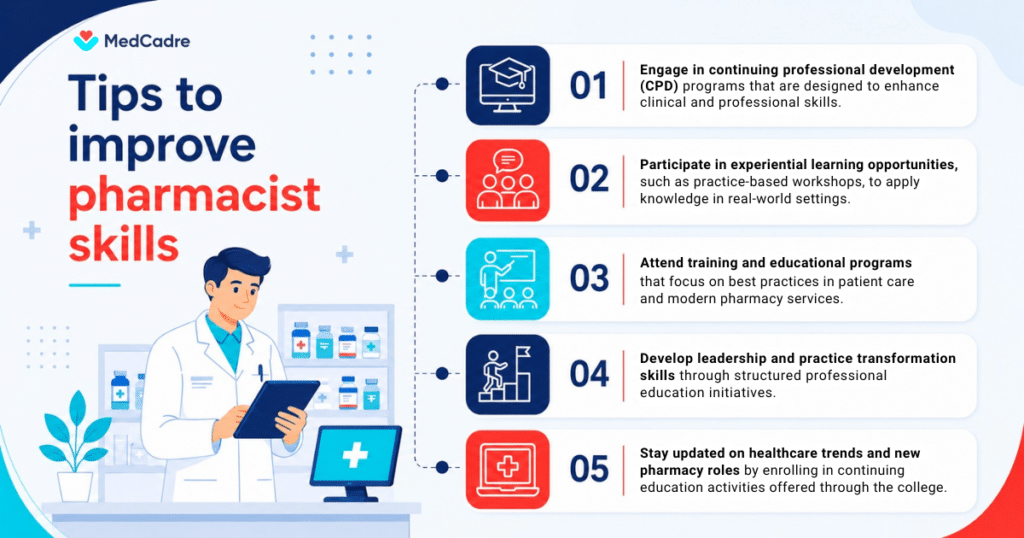
Pharmacy professionals must take the time to improve their skills by enrolling in online education programs and attending healthcare conferences. Working professionals like you must stay up to date with FDA regulations, industry trends, and modern healthcare technologies to improve daily pharmacy practice. As a job seeker, you must remember that having a valid certificate can increase your pay at your workplace.
You also practice communication and patient counseling techniques to build stronger professional relationships with patients. The skills explained in this blog will help you grow in the modern pharmacist sector and find jobs faster in a competitive world.
For example, certifications like Medication Therapy Management (MTM) or Immunization Certification programs can help pharmacists improve their clinical and patient care skills.
A detailed infographic has been added to explain how to improve skills.
Effective approaches to enhance pharmacist skills
How pharmacists can find the right job with modern platforms
Professionals seeking well-paid pharmacist roles should develop skills aligned with current market trends to improve their chances of securing the right position. Your decision about where to apply directly impacts how you get hired. To make your job search more effective, consider avoiding traditional agencies and free job portals.
Traditional agencies may slow down your hiring process because they rely on manual processes. On the other hand, partnering with free job portals often results in outdated listings and intense competition, making it harder for your application to stand out.
To overcome these challenges, you need a more efficient staffing platform like MedCadre.This pharmacist staffing platform is designed to connect you with clinics and streamline your path to landing the right role. It also comes with multiple benefits, such as:
- Get credentialed 30% faster so you can start your new assignment sooner
- Submit timesheets easily and get paid accurately, right on schedule.
- Guarantees that a significant portion of the bill rate is allocated directly to your pay.
Healthcare job seekers can regularly check the current openings page for newly posted opportunities. You can also submit your resume to receive updates on roles that align with your goals and preferred location.
FAQs
How can professionals grow in a pharmacist career?
Professionals can grow professionally by improving their clinical knowledge, communication skills, and understanding of healthcare technology. Regular learning and practical experience also help you handle patient care more confidently.
What are the basic pharmacist requirements for healthcare roles?
Most employers expect professionals to hold the required qualifications, active licenses, and strong patient care skills. Some positions may also require clinical experience or additional certifications.
Why do healthcare employers value clinical knowledge in pharmacy?
Clinical knowledge helps pharmacists review medications accurately, identify possible drug interactions, and support safe treatment plans. It also allows them to work more effectively with physicians and healthcare teams.
Where can I search for pharmacist jobs near me?
You can explore healthcare staffing platforms like MedCadre to find pharmacy opportunities that match your skills, experience, and preferred location.
How does MedCadre help professionals complete credentialing faster?
The platform simplifies the credentialing process, making it 30% faster and helping professionals submit required documents more efficiently. This allows candidates to prepare for assignments without unnecessary delays.