Healthcare professionals who are seeking a job change as biomedical equipment technicians must know several factors. These factors include the challenges they may face.
The healthcare sector has faced several challenges, and biomedical equipment technicians (BMETs) are no exception.
They play an important role in keeping medical equipment safe, accurate, and working properly. However, BMETs face several challenges while carrying out these responsibilities.
Therefore, biomedical technician jobs are among the in-demand roles in healthcare today. In this blog, we will show you the challenges professionals face and how to overcome them.
What is biomedical equipment?
As most job seekers are aware of the job and its responsibilities an explanation is provided for applicants who recently graduated.
Biomedical equipment is related to medical instruments used in medicine, biology, and pharmacology. It is associated with several chemical and biological processes for patient care.
This equipment helps medical specialists detect diseases. It allows doctors to provide the right treatment and life-saving medicines to patients.
In short, the instruments save lives by detecting diseases and helping doctors provide better patient care.
Biomedical technician jobs are in high demand in the modern healthcare scenario. The equipment technicians, however, must be skilled and qualified to perform the tasks.
Common challenges for biomedical equipment technicians
Biomedical equipment technicians (BMETs) are also known as biomedical engineering technicians or biomedical equipment specialists. They help keep medical equipment safe and working properly by maintaining, repairing, and calibrating it.
The challenges, however, exist within the sector and sometimes hamper the quality of service. A medical equipment technician is an essential position in any facility.
So, the challenges are inevitable as the industry is massive in volume, and the importance is undeniable.
Despite the vital role the medical equipment technician plays in hospitals, clinics, etc., The equipment technicians also face the following challenges:
- Shortage of skilled workers: The demand for skilled BMETs is growing. The limited number of qualified workers can put pressure on healthcare facilities. It can also create more job opportunities for BMETs.
- Lack of standardization and regulations: There are no national certification or licensing requirements for BMETs. This can lead to differences in skills and make safety and liability issues harder to manage.
- Inadequate compensation and recognition: BMETs may receive lower pay and less recognition, even though they play an important role in keeping medical equipment safe and working properly.
- Limited resources and budget constraints: Tight healthcare budgets can limit BMETs’ access to training and updated equipment. They can also mean fewer staff to do the job effectively.
- Stressful work environment: Long hours, equipment problems, and pressure to keep medical devices working safely can be stressful. This can lead to burnout and job dissatisfaction.
- Rapid technological advancements: BMETs must keep learning and updating their skills as new and more complex medical devices are introduced.
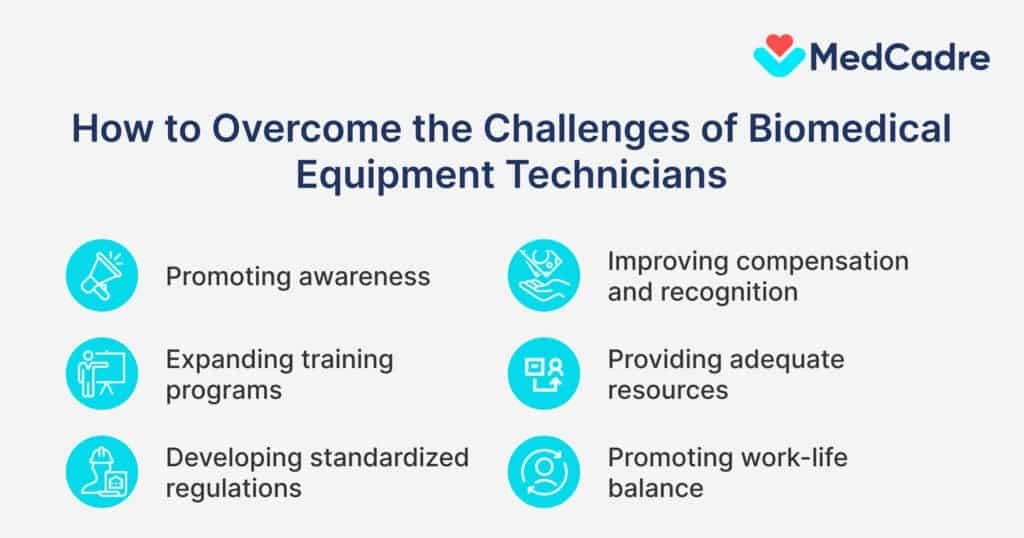
The infographic is added to explain how to overcome the key challenges as a job seeker while you are working at facilities.
Growing demand for biomedical equipment technicians
There is a significant demand for equipment technicians in the industry. As health has become a serious concern for everyone, biomedical equipment technicians are highly needed in the country.
As a job seeker, you must understand that biomedical technician jobs are expected to grow by 13% in the U.S. from 2024 to 2034.
More biomedical technician jobs are opening up. This gives professionals like you more opportunities to find a role that matches your skills.
The growth is driven by multiple factors, including an aging population, advances in medical technology, and a greater focus on patient safety.
Key factors to consider when choosing where to work as a BMET
As you know, the demand for these roles means you must also research a few more factors to make a planned decision.
The following measures are essential to take as a job seeker before you apply for biomedical technician jobs for career growth.
Cost of living: A crucial factor to consider when choosing a location. States with a high demand for BMETs may also have a higher cost of living.
Career advancement: Some states may offer better opportunities for career advancement in specific specialties or areas of focus within the BMET field.
High-demand states: States such as California, Texas, Florida, New York, and Pennsylvania offer strong opportunities for biomedical equipment technicians.
Salary: As a job seeker, consider the compensation offered for the role. You need to remember that pay can vary based on your location, experience, skills, and specialization.
For example, if you are planning to apply for a biomedical equipment technician role in Ohio, you can expect an average annual salary of around $65,040.
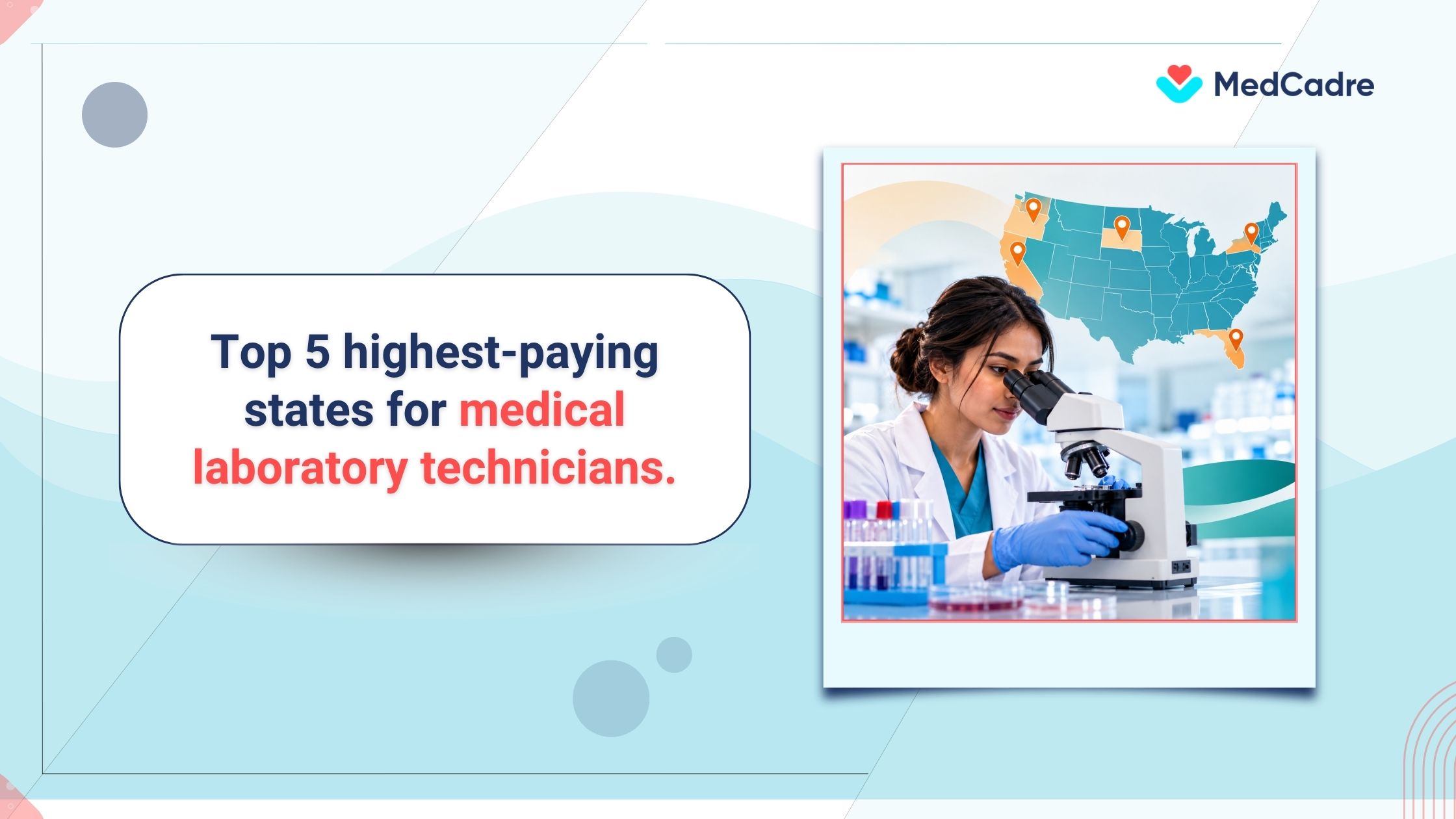
Maintaining up-to-date information about salary will help you choose a better role. It will also help you negotiate the salary before you complete your onboarding. To keep you informed, an infographic is provided about top-paying states.
Top-paying states for biomedical equipment technicians
States | Hourly pay | Annual pay |
South Dakota | $ 38.67 | $ 80,440 |
Washington | $ 38.56 | $ 80,200 |
Maine | $ 38.54 | $ 80,170 |
New Jersey | $ 38.38 | $ 79,830 |
California | $ 37.59 | $ 78,190 |
Source: BLS
Choosing the right platform for better healthcare jobs
Knowing about the challenges will help you make a planned decision while choosing a role for career growth.
Along with ways to overcome these challenges, you must also know how to choose a staffing platform. Choosing a better staffing platform is a vital step because it affects how quickly you can join your desired role.
In order to choose a modern staffing platform, you need to know a few essential points.
Reduce dependence on traditional agencies, as they come with multiple challenges.
These include unverified profiles and minimal assistance related to credentialing. They also have less transparency about compensation numbers.
To overcome such challenges, you can choose modern staffing platforms MedCadre. It is an AI-powered staffing platform that helps you find biomedical equipment technician jobs based on your skills and experience.
Choosing MedCadre is a better option, as it comes with multiple benefits such as:
- You can accelerate your credentialing by 30%, allowing you to start your assignment promptly.
- It also has an integrated timesheet system that guarantees swift approvals, ensuring timely and accurate payments.
As a job seeker, you browse current openings to see positions that may be a good fit for you. You can also submit your resume to stay connected with future opportunities that match your nursing experience and career goals.
FAQs
What are the biggest career challenges for experienced BMETs today?
Many experienced technicians face challenges such as increased workloads, limited resources, and pressure to maintain complex equipment. Keeping up with rapid technological changes while managing daily responsibilities can also be demanding.
How can I stay competitive as an experienced biomedical equipment technician?
To stay competitive, as a job seeker, you need to focus on upgrading your skills as new medical technologies are introduced. Gaining experience with advanced equipment, learning new systems, and staying updated with industry practices can help you remain valuable in a fast-changing healthcare environment
What should I look for when switching BMET jobs?
As a job seeker, you need to look beyond salary. Consider the work environment, access to modern equipment, and training opportunities. Choose a role that supports your long-term growth, and work-life balance is important.
How is MedCadre different from traditional agencies for BMETs?
MedCadre provides transparent job details, including pay, role requirements, and work environment, so you can make informed decisions. Its AI-powered portal accelerates credentialing by 30%, helping you move through the hiring process faster.
Does MedCadre ensure reliable payments and work transparency?
Yes, MedCadre offers an integrated timesheet system that supports quick approvals and timely payments. You also get clear visibility into job expectations, helping you avoid confusion and focus on your work with confidence.